 Tooter
How to say goodbye in French
Goodbye in French is au revoir (oh ruh-VWAHR). It works with anyone, at any time of day. Bye is salut (sa-LOO), which friends also use for hi. À bientôt (ah byan-TOH) means see you soon, and à plus (ah PLOOS) is a casual see you later.
Practice it with a tutor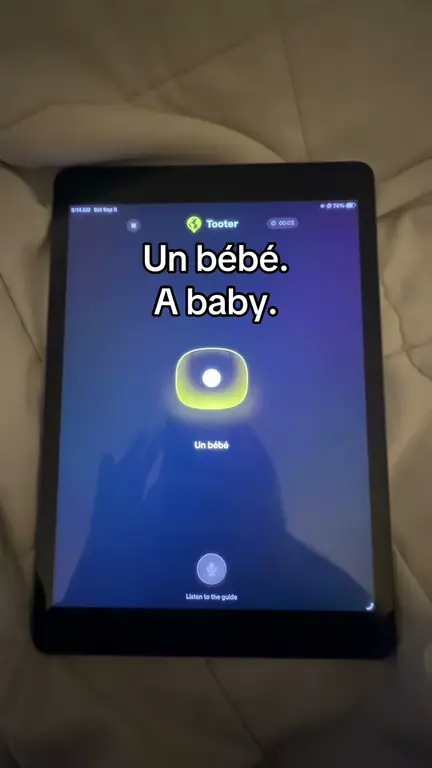 Learning French
- 112.3K likes
- 1.4K comments
- 128.7K shares
 Learning Spanish
- 102.8K likes
- 737 comments
- 22.9K shares
 Learning Korean
- 95.6K likes
- 1.5K comments
- 20.1K shares
Where will you say au revoir?
Pick one to start your plan. It takes about a minute.
Every way to say goodbye
Au revoir is always safe. The others depend on how well you know the person and when you'll meet again.
oh ruh-VWAHR. The standard goodbye, for anyone. Add madame or monsieur with strangers.
sa-LOO. For friends, family and people your age. The same word means hi when you arrive.
ah byan-TOH, with the an in your nose. For anyone you expect to see again, with no fixed date.
ah PLOOS. Short for à plus tard, and in this short form the s is pronounced. In texts it's often A+ or @+.
ah too tah LUHR. Only when you'll meet again the same day. Friends shorten it to à toute (ah TOOT). For a few minutes from now, say à tout de suite.
ah duh-MAN, with the an in your nose. Swap in any day: à lundi, à samedi.
CHOW. Borrowed from Italian and also spelled tchao. In French it's only for leaving, and only with people you know.
ah-DYUH. From à Dieu, to God. It's for a goodbye that's final, so most people rarely say it. In parts of southern France and Switzerland, some speakers use it as a casual hi or bye.
Learners film their Tooter practice
Real videos from Tooter creators practicing with their tutor. Public TikTok counts, October 26, 2026.
 Learning German
- 26.9K likes
- 694 comments
- 3.9K shares
 Learning Korean
- 9.3K likes
- 124 comments
- 912 shares
 Learning Spanish
- 1.5K likes
- 31 comments
- 526 shares
 Learning Korean
- 3K likes
- 68 comments
- 412 shares
 Learning Korean
- 3.2K likes
- 44 comments
- 367 shares
 Learning Spanish
- 777 likes
- 26 comments
- 201 shares
Formal vs casual: which goodbye to use
The choice follows tu and vous: if you'd say vous to someone, skip salut, à plus and ciao.
| Goodbye | Who with | When it fits |
|---|---|---|
| Au revoir | Anyone | Any time |
| Bonne journée | Anyone | Leaving during the day |
| Bonne soirée | Anyone | Leaving in the evening |
| À bientôt | Anyone | You'll meet again soon |
| À tout à l'heure | Anyone | Later the same day |
| À demain | Anyone | You'll meet tomorrow |
| À plus | Friends, classmates | You'll meet again |
| Salut | Friends, family | Any time |
| Ciao | Friends, family | Any time |
| Adieu | Almost nobody | You'll never meet again |
Saying goodbye to a friend
Finishing a coffee with a friend in Lyon. Claire has a train to catch, so she starts the goodbye.
Goodbye wishes and ways to leave
French speakers often end a conversation by wishing you something for the hours ahead.
- politeBonne journéeHave a nice day
bun zhoor-NAY. The usual goodbye from shop staff and coworkers during the day.
- politeBonne soiréeHave a nice evening
bun swah-RAY. From late afternoon on, when someone has the evening ahead of them.
- politeBonne nuitGood night
bun NWEE. Only when someone is going to bed.
- politeBon voyageHave a good trip
bohn vwah-YAHZH. For someone leaving on a trip, so it doesn't work as an everyday goodbye.
- casualÀ la prochaineUntil next time
ah lah proh-SHEN. Friendly, for when you'll meet again but don't know when.
- politeBonne continuationAll the best
bun kohn-tee-nwah-SYOHN. Literally good continuation. For someone you may not see for a while.
- politeMerci, au revoirThank you, goodbye
What you say when you leave a shop, café or bakery, even if you bought nothing.
- politeJe dois y allerI have to go
zhuh dwah ee ah-LAY. The usual way to start leaving. Friends also say j'y vais (I'm off).
Pick the best reply
Someone is leaving. Say each reply out loud, then pick the one that fits. Every reply is correct French; some just don't fit the moment.
How to say au revoir, salut and adieu
Start with a plain oh
Au spells one sound, a clean oh with no glide. Then re is a quick, soft ruh. In everyday speech it nearly disappears: oh rvwahr.
Finish on vwahr
The spelling oi sounds like wah, so voir is vwahr. French stress falls lightly at the end, and the final r comes from the back of the throat.
Salut works in both directions
Salut means hi when you arrive and bye when you leave, so friends can say it twice in one meeting. The t is silent either way, and the u isn't a plain oo: say ee with your lips rounded tight. Keep it for people you'd call tu.
Keep adieu for real endings
Au revoir points to seeing someone again, since revoir means to see again. Adieu comes from à Dieu, to God: you leave someone in God's care because you don't expect to meet again. Said at a friend's door, it sounds far too final.
Say it out loud with a French tutor
Lifelike AI tutors play the other person and correct you as you speak. Pick one to start.
 Camilleculture-richPractice with Camille
 Amelieconfidence-buildingPractice with Amelie
 Leanatural correctionPractice with Lea
 Manonfluency-drivenPractice with Manon
 Clarascenario-ledPractice with Clara
 Inesrhythm-awarePractice with Ines
 Julietteconversation-firstPractice with Juliette
 Noemietravel-focusedPractice with Noemie
 @liv.slowlyfluent
 @learningwith.emma
 @learningwith.michelle
Questions learners ask
What are 5 ways to say goodbye in French?
The five you'll use most are au revoir (goodbye), salut (bye), à bientôt (see you soon), à plus (see you later) and bonne journée (have a nice day). Au revoir, à bientôt and bonne journée work with anyone. Salut and à plus are for people you know.
How do you say bye in French?
Say salut (sa-LOO) to friends and family. You'll also hear ciao (chow) and à plus among friends. With strangers or in a shop, use au revoir instead.
Is salut hello or goodbye?
Both. Salut means hi when you arrive and bye when you leave, and the moment tells you which. It's casual, so keep it for people you know.
Is it ciao or au revoir?
Au revoir is the French word and it works with anyone. Ciao is an Italian word that French speakers also use as a casual bye. It's fine with friends and out of place with strangers.
Is ciao hello or goodbye in French?
Goodbye. In Italian ciao means both hi and bye, but French speakers use it only when leaving. You may also see it spelled tchao.
Why do French people rarely say adieu?
Adieu comes from à Dieu, to God, and it's for someone you don't expect to see again. Because it sounds final, people keep it for a death, a breakup or a dramatic moment. For a normal goodbye, say au revoir.
What does bon adieu mean?
Word for word, bon adieu would mean good farewell, but it isn't a phrase you'll hear in everyday French. Adieu stands alone. For a warm goodbye to someone you may not see for a while, say bonne continuation.
How do you pronounce au revoir?
Say oh ruh-VWAHR, with light stress on the end and the final r at the back of your throat. In Tooter you can say it out loud with an AI tutor, who corrects your pronunciation as you speak.
Say au revoir to a tutor today.
Answer a few quick questions, then practice out loud with a tutor.
By the Tooter Editorial Team. Updated November 5, 2026. Tooter tutors are AI characters, not human teachers.