 Tooter
Learn Italian by speaking
The most practical way to learn Italian is to speak it from your first week: learn everyday phrases like buongiorno and grazie, say them out loud, and get corrected as you go. Italian is spelled the way it sounds, so once the vowels and double consonants click, short daily practice adds up.
Practice it with a tutor Live
 Live
 Live
Where do you need Italian?
Pick one to start your plan. It takes about a minute.
Why learn Italian by speaking
- Good morning / Hello: Buongiorno
Italian is the language of Italy and San Marino, one of Switzerland's national languages and the everyday language of Vatican City. You probably know more than you think: pizza, espresso, piano, allegro, bravo. A trip to Italy, family roots or a love of food and film are the usual reasons to start, and every one of them ends in conversation.
Many learners can read an Italian menu long before they can order from it. That gap is a speaking problem, not a vocabulary problem. Italians talk quickly and expect an answer, so your ears and mouth need practice with real back-and-forth: hearing a question, finding the words and replying before the moment passes.
Speaking early also gets the sounds right. Italian is spelled almost exactly the way it sounds, but two things trip up English speakers: every vowel is pronounced, including the last one, and double consonants are held longer, so pala (shovel) and palla (ball) are different words. Both settle in only after you have said them out loud many times.
Your first five Italian phrases
These five carry most of a first conversation in a cafe, shop or hotel. Say each one out loud a few times.
The safe hello for shops, cafes and anyone you don't know, until lunch or early afternoon depending on the region. After that, switch to buonasera.
For friends, family and people your age. With staff and older strangers, use buongiorno or buonasera instead.
Literally "I call myself." Sono... (I'm...) works too.
Say the final e: GRAHT-tsyeh, not GRAH-zee. Grazie mille means thank you very much.
Uses the polite Lei form, so it fits anyone. With a friend, say Puoi ripetere?
How Tooter teaches Italian
Learn Italian online or on your phone, built around speaking: short Italian lessons first, then conversation practice out loud with an AI tutor.
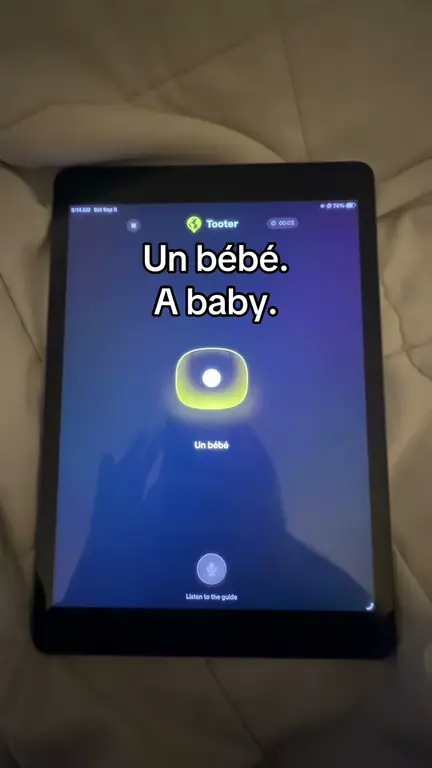 Learning French
- 112.3K likes
- 1.4K comments
- 128.7K shares
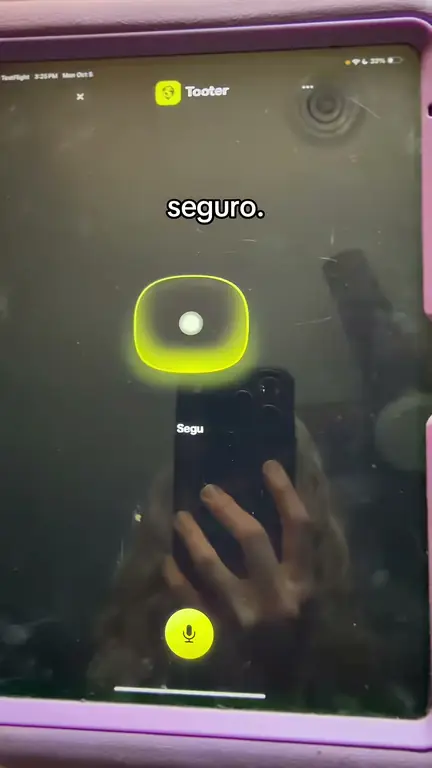 Learning Spanish
- 102.8K likes
- 737 comments
- 22.9K shares
Real Tooter lessons, filmed by learners on TikTok
Lifelike AI tutors
Tooter's tutors are AI characters with faces and voices who speak standard Italian. They play a barista, a waiter in a trattoria or a new friend, so you practice the conversations you will actually have.
Corrections while you speak
Your tutor points out pronunciation, grammar and word choice as you talk, then lets you try again. You can ask for explanations in English when you get stuck.
Guided lessons first
Short chapters with listening, translation, word ordering, matching and dialogue build the phrases you then use with a tutor, in sessions of 5 to 30 minutes.
Tu or Lei, and double consonants
Italian makes you choose between a casual and a polite "you," and it cares about how long you hold a consonant. Tutors play people of different ages and roles, so you practice both until they feel natural.
What is easy and hard about Italian for English speakers
Italian is one of the friendlier languages for English speakers, with a few real hurdles.
- Easier
Spelling matches sound
Five clear vowels, and words are read the way they're written.
- Easier
Thousands of shared words
Importante, possibile, università: Latin roots you already know.
- Takes practice
Verb endings
Verbs change for every person: parlo, parli, parla, parliamo.
- Takes practice
Gender and agreement
Articles and adjectives match the noun: il ragazzo, la ragazza.
- Takes practice
Double consonants
Nono (ninth) and nonno (grandfather) differ only in a held n.
Italian phrases, words and guides
Tap a bubble for the phrase, its audio and how to use it.
- How to learn Italian
- GrazieHow to say thank you in Italian
- CiaoHow to say hello in Italian
- BuongiornoHow to say good morning in Italian
- Buon compleanno!How to say happy birthday in Italian
- ArrivederciHow to say goodbye in Italian
- SìHow to say yes in Italian
- Ti amoHow to say I love you in Italian
- Buon Natale!How to say merry Christmas in Italian
- Per favoreHow to say please in Italian
- CiaoWhat does ciao mean?
- Best apps to learn Italian
Say it out loud with an Italian tutor
Lifelike AI tutors play the other person and correct you as you speak. Pick one to start.
Giuliafluency-drivenPractice with Giulia Sofiascenario-ledPractice with Sofia Chiararhythm-awarePractice with Chiara  Auroraconversation-firstPractice with Aurora
 Martinatravel-focusedPractice with Martina
 Alessiaculture-richPractice with Alessia
 Francescaconfidence-buildingPractice with Francesca
 Beatricenatural correctionPractice with Beatrice
Questions learners ask
Is Italian hard to learn for English speakers?
Italian is one of the easier languages for English speakers. It uses the same alphabet, shares thousands of Latin-based words with English and is spelled the way it sounds. The harder parts are verb endings, gender agreement and speaking at natural speed.
How long does it take to learn Italian?
The US Foreign Service Institute estimates about 24 weeks of full-time classroom study for an English speaker to reach professional working ability, which puts Italian in its easiest group. Studying part-time takes longer, but simple everyday exchanges come much sooner with daily speaking practice.
How can I learn Italian by myself?
Learn the five vowels and the most common phrases first, listen to Italian every day, and speak out loud from the start. Get regular feedback on your speaking from a partner, a teacher or an AI tutor, and keep sessions short and daily.
Can you learn Italian with an app?
Yes, if you use it every day and it makes you speak, not just tap answers. Choose an app where you talk out loud and get corrected, like Tooter's AI tutors, and pair it with Italian listening you enjoy.
Can I learn Italian online for free?
Yes, you can get far with free resources: podcasts for learners, Italian music, films and series with Italian subtitles, graded readers and local language exchanges. What free resources rarely give you is regular speaking practice with corrections.
Should I learn standard Italian or a dialect?
Learn standard Italian. It is what schools, TV and newspapers use and what people understand everywhere in Italy. Regional languages like Neapolitan, Sicilian or Venetian are worth exploring later, especially if your family speaks one.
Does Italian use the same alphabet as English?
Yes. Native Italian words use 21 letters; j, k, w, x and y appear mostly in foreign words like jeans or taxi. Accent marks such as à, è, é, ì, ò and ù show stress on the last syllable, as in città (city), caffè (coffee) and perché (why, because).
What does "ciao a tutti" mean?
Ciao a tutti means "hi, everyone" or "bye, everyone," a friendly greeting for a group. Keep the a: you may see "ciao tutti" in casual messages, but ciao a tutti is the standard form.
Say buongiorno to a tutor today.
Answer a few quick questions, then practice out loud with a tutor.
By the Tooter Editorial Team. Updated November 3, 2026. Tooter tutors are AI characters, not human teachers.