 Tooter
French conversation practice
Practice French conversation by saying short dialogues out loud, level by level: meeting someone, ordering at a café, then making plans with a friend. Use vous with strangers and tu with friends, pick the best reply in the practice round, then record yourself to hear your liaisons.
Practice it with a tutor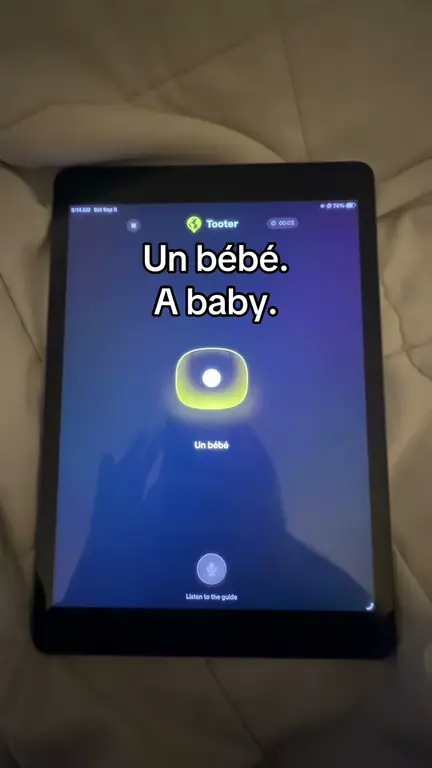 Learning French
- 112.3K likes
- 1.4K comments
- 128.7K shares
 Learning Spanish
- 102.8K likes
- 737 comments
- 22.9K shares
 Learning Korean
- 95.6K likes
- 1.5K comments
- 20.1K shares
Where will you speak French?
Pick one to start your plan. It takes about a minute.
How to practice French speaking on this page
The dialogues go up one level at a time. Start with the beginner one, even if it looks easy. Once you can say your lines without reading them, move to the next level.
Say every You line out loud, then swap and say the other person's lines. French sounds run together, so a sentence you can read may still be hard to say. Next, pick a reply in the practice round, then record the sentences at the end and compare yourself with the model.
Two things change how you sound in every sentence: tu or vous, and liaison, the linking sound between words. Both have a table on this page. Tooter's French tutors speak Parisian French.
Learners film their Tooter practice
Real videos from Tooter creators practicing with their tutor. Public TikTok counts, October 26, 2026.
 Learning German
- 26.9K likes
- 694 comments
- 3.9K shares
 Learning Korean
- 9.3K likes
- 124 comments
- 912 shares
 Learning Spanish
- 1.5K likes
- 31 comments
- 526 shares
 Learning Korean
- 3K likes
- 68 comments
- 412 shares
 Learning Korean
- 3.2K likes
- 44 comments
- 367 shares
 Learning Spanish
- 777 likes
- 26 comments
- 201 shares
French conversations to practice
Pick a level. Play each line, then say it yourself.
Beginner: meeting someone
A first conversation at a language exchange, with vous. A woman writes enchantée, which sounds the same as enchanté.
Elementary: ordering at a café
Sitting at a café in Paris. Staff always use vous with customers, and you use it back.
Intermediate: making plans with a friend
Two friends with tu, in everyday spoken French. On replaces nous here, as it does in most conversation.
Pick the best reply
Someone speaks to you. Say each reply out loud, then pick the one that fits. Every reply is correct French; some just don't fit the moment.
Tu vs vous: the same question, two ways
Use tu with friends, family, kids and classmates. Use vous with strangers, staff, older people and at work until someone invites you to switch, often with on se tutoie ? Vous is also the plural: any group is vous, even friends.
| English | Tu | Vous |
|---|---|---|
| How are you? | Ça va ? | Comment allez-vous ? |
| What's your name? | Comment tu t'appelles ? | Comment vous appelez-vous ? |
| Where are you from? | Tu viens d'où ? | Vous venez d'où ? |
| Please | S'il te plaît | S'il vous plaît |
| Excuse me | Excuse-moi | Excusez-moi |
| And you? | Et toi ? | Et vous ? |
Liaison notes: when a silent letter wakes up
A final consonant is usually silent in French. Before a word starting with a vowel or a silent h, some of them are pronounced and join the next word. S and x sound like z. The linking is required after words like les, des, un, vous, nous and on, and never happens after et.
| French | Sounds like | Link | English |
|---|---|---|---|
| vous avez | voo-za-VAY | z | you have |
| les amis | lay-za-MEE | z | the friends |
| un ami | uhn-na-MEE | n | a friend |
| on y va | ohn-nee-VAH | n | let's go |
| chez elle | shay-ZEL | z | at her place |
| vingt heures | van-TUR | t | 8 p.m. |
| c'est une idée | say-tune-ee-DAY | t | it's an idea |
| et aussi | ay oh-SEE | none | and also |
Listen, record, compare
Play a sentence, say it right after, record yourself and listen to both. Listen for the linking sounds and the light stress at the end of each group of words.
Stress lands lightly on the last syllable: bohn-ZHOOR, ma-PEL.
voo-za-VAY: the s of vous sounds like z and joins avez.
Keep it flat and even, then a light rise on café.
Two links: noo-za-VOHN and uhn-na-MEE.
The silent t of comment wakes up: ko-mahn-ta-lay-VOO.
say-TUNE: the t of c'est joins une.
ohn-nee-VAH, three beats said as one word.
Your recording stays on this device and isn't scored. In the app, your tutor listens and corrects you as you speak.
How to keep a French conversation going
Ask back
After you answer, add Et vous ? or Et toi ? It takes one second and hands the conversation back to the other person.
Learn your rescue lines
Je ne comprends pas, Vous pouvez répéter, s'il vous plaît ? and Comment dit-on ... en français ? keep a conversation alive when you get stuck.
Say bonjour first
In France, start with bonjour before you ask anything, even a quick question. People answer more warmly when you do.
Talk to a tutor
On Tooter you hold a live spoken conversation with an AI tutor for 5 to 30 minutes, and it corrects your pronunciation, grammar and vocabulary as you speak.
Say it out loud with a French tutor
Lifelike AI tutors play the other person and correct you as you speak. Pick one to start.
 Camilleculture-richPractice with Camille
 Amelieconfidence-buildingPractice with Amelie
 Leanatural correctionPractice with Lea
 Manonfluency-drivenPractice with Manon
 Clarascenario-ledPractice with Clara
 Inesrhythm-awarePractice with Ines
 Julietteconversation-firstPractice with Juliette
 Noemietravel-focusedPractice with Noemie
 @liv.slowlyfluent
 @learningwith.emma
 @learningwith.michelle
Questions learners ask
How can I practice French speaking by myself?
Say dialogues out loud, play both roles, and record yourself so you can compare with a model. Short daily sessions work best. When you're ready for real replies, talk with a partner or an AI tutor.
What should a French conversation for beginners cover?
Start with situations that follow a script: greeting someone, saying your name and where you're from, ordering at a café and asking for help. The same lines come up every time, so you can rehearse them first.
When do I use tu or vous in French?
Use tu with friends, family, kids and classmates. Use vous with strangers, staff, older people and at work, and with any group of people. If you aren't sure, start with vous. The other person will often suggest tu if they prefer it.
What is liaison in French?
Liaison is when a final consonant that is usually silent gets pronounced because the next word starts with a vowel or a silent h. Vous is voo on its own, but vous avez sounds like voo-za-VAY. It's required after words like les, un and vous, and it never happens after et.
Can I practice French conversation with AI?
Yes. Tooter's tutors are lifelike AI characters you talk to out loud. They reply in real time and correct your pronunciation, grammar and vocabulary as you speak, and they can explain things in your native language if it's one of Tooter's 12 languages.
What do I say when I don't understand someone in French?
Say Je ne comprends pas (I don't understand), then Vous pouvez répéter, s'il vous plaît ? (can you repeat, please?) or Vous pouvez parler plus lentement ? (can you speak more slowly?). With a friend, use Tu peux répéter ?
Start a French conversation today.
Answer a few quick questions, then practice out loud with a tutor.
By the Tooter Editorial Team. Updated November 4, 2026. Tooter tutors are AI characters, not human teachers.