 Tooter
Numbers in Spanish
Spanish numbers 1 to 10 are uno, dos, tres, cuatro, cinco, seis, siete, ocho, nueve and diez, and zero is cero. Next come once (11) to veinte (20), then treinta (30), cuarenta (40) and so on, with y joining tens and ones: treinta y uno (31).
Practice it with a tutor Learning Spanish
- 102.8K likes
- 737 comments
- 22.9K shares
 Learning French
- 112.3K likes
- 1.4K comments
- 128.7K shares
 Learning Korean
- 95.6K likes
- 1.5K comments
- 20.1K shares
Where will you use Spanish numbers?
Pick one to start your plan. It takes about a minute.
Spanish numbers 0 to 10
| Number | Spanish | Sounds like |
|---|---|---|
| 0 | cero | SEH-roh |
| 1 | uno | OO-noh |
| 2 | dos | dohs |
| 3 | tres | trehs (tapped r) |
| 4 | cuatro | KWAH-troh |
| 5 | cinco | SEEN-koh |
| 6 | seis | sayss |
| 7 | siete | SYEH-teh |
| 8 | ocho | OH-choh |
| 9 | nueve | NWEH-beh |
| 10 | diez | dyehs |
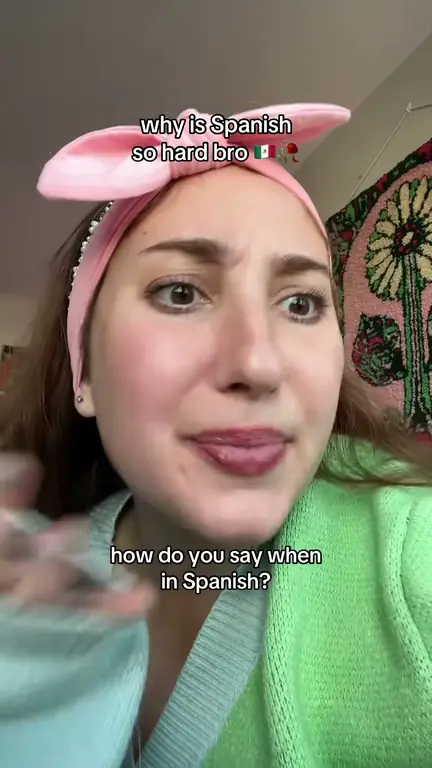
Learners film their Tooter practice
Real videos from Tooter creators practicing with their tutor. Public TikTok counts, October 26, 2026.
 Learning Spanish
- 1.5K likes
- 31 comments
- 526 shares
 Learning Spanish
- 777 likes
- 26 comments
- 201 shares
 Learning Spanish
- 374 likes
- 10 comments
- 49 shares
 Learning German
- 26.9K likes
- 694 comments
- 3.9K shares
 Learning Korean
- 9.3K likes
- 124 comments
- 912 shares
 Learning Korean
- 3K likes
- 68 comments
- 412 shares
Numbers 11 to 30
11 to 15 have their own names. From 16 to 29, you join diez or veinte and the ones into a single word. Watch the accents on dieciséis, veintidós, veintitrés and veintiséis.
| Number | Spanish | Sounds like |
|---|---|---|
| 11 | once | OHN-seh |
| 12 | doce | DOH-seh |
| 13 | trece | TREH-seh |
| 14 | catorce | kah-TOR-seh |
| 15 | quince | KEEN-seh |
| 16 | dieciséis | dyeh-see-SAYSS |
| 17 | diecisiete | dyeh-see-SYEH-teh |
| 18 | dieciocho | dyeh-see-OH-choh |
| 19 | diecinueve | dyeh-see-NWEH-beh |
| 20 | veinte | BAYN-teh |
| 21 | veintiuno | bayn-tee-OO-noh |
| 22 | veintidós | bayn-tee-DOHS |
| 23 | veintitrés | bayn-tee-TREHS |
| 24 | veinticuatro | bayn-tee-KWAH-troh |
| 25 | veinticinco | bayn-tee-SEEN-koh |
| 26 | veintiséis | bayn-tee-SAYSS |
| 27 | veintisiete | bayn-tee-SYEH-teh |
| 28 | veintiocho | bayn-tee-OH-choh |
| 29 | veintinueve | bayn-tee-NWEH-beh |
| 30 | treinta | TRAYN-tah |
The tens from 30 to 99
From 31 on, the tens and ones are separate words joined by y (and). Every number up to 99 follows this pattern.
| Number | Spanish |
|---|---|
| 30 | treinta |
| 31 | treinta y uno |
| 32 | treinta y dos |
| 40 | cuarenta |
| 45 | cuarenta y cinco |
| 50 | cincuenta |
| 60 | sesenta |
| 70 | setenta |
| 80 | ochenta |
| 90 | noventa |
| 99 | noventa y nueve |
Hundreds, thousands and millions
No y after the hundreds: 105 is ciento cinco. Hundreds from 200 to 900 also have a feminine form ending in -as, such as doscientas personas.
| Number | Spanish |
|---|---|
| 100 | cien |
| 101 | ciento uno |
| 150 | ciento cincuenta |
| 200 | doscientos |
| 300 | trescientos |
| 400 | cuatrocientos |
| 500 | quinientos |
| 600 | seiscientos |
| 700 | setecientos |
| 800 | ochocientos |
| 900 | novecientos |
| 1,000 | mil |
| 1,500 | mil quinientos |
| 2,000 | dos mil |
| 10,000 | diez mil |
| 100,000 | cien mil |
| 1,000,000 | un millón |
| 2,000,000 | dos millones |
| 1,000,000,000 | mil millones |
Rules that make Spanish numbers easy
Uno, un or una
Count with uno, but before a noun it becomes un (masculine) or una (feminine): un café, una mesa. The same goes at the end of bigger numbers: veintiún años, treinta y una personas.
Cien or ciento
Say cien for exactly 100 (cien personas, cien mil) and ciento for 101 to 199 (ciento veinte). Don't add y after it: ciento cinco, not ciento y cinco.
Learn three hundreds on their own
Quinientos (500), setecientos (700) and novecientos (900) don't follow the pattern of cinco, siete and nueve. The other hundreds are just the number plus -cientos.
Mil never changes, millón does
A thousand is just mil (not un mil), and two thousand is dos mil, never dos miles. Millón needs un and takes de before a noun: un millón de personas, dos millones de años.
A billion is mil millones
In Spanish, un billón is a million millions (a trillion in English). For the US billion, say mil millones.
Commas and periods can flip
Spain and much of South America write a thousand as 1.000 and use a comma for decimals (2,5). Mexico writes numbers the US way (1,000 and 2.5). Reading prices aloud in a shop role play, for example with a Tooter tutor, is the fastest way to get quick with them.
Numbers in everyday sentences
Pesos in Mexico and several other countries; euros in Spain.
Literally "How many years do you have?"
For one o'clock, say Es la una.
Years are read as one whole number, not in pairs as in English.
Say it out loud with a Spanish tutor
Lifelike AI tutors play the other person and correct you as you speak. Pick one to start.
 Sofianatural correctionPractice with Sofia
 Luciafluency-drivenPractice with Lucia
 Valeriascenario-ledPractice with Valeria
 Albarhythm-awarePractice with Alba
 Carmenconversation-firstPractice with Carmen
 Claratravel-focusedPractice with Clara
 Martaculture-richPractice with Marta
 Elenaconfidence-buildingPractice with Elena
 @wallakpu.slowly.fluent
 @learningwith.michelle
Questions learners ask
How do you count to 10 in Spanish?
Uno, dos, tres, cuatro, cinco, seis, siete, ocho, nueve, diez. Zero is cero.
When do you use uno, un or una?
Use uno when counting or when the number stands alone. Before a masculine noun it shortens to un (un libro, veintiún años), and before a feminine noun it becomes una (una casa, treinta y una personas).
How do you say 100 in Spanish?
Cien. It changes to ciento when another number follows: ciento uno (101), ciento cincuenta (150). Two hundred is doscientos.
Is it veintiuno or veinte y uno?
Veintiuno, written as one word. All numbers from 16 to 29 are single words; veinte y uno is an old spelling you may still see in older texts.
How do you say years in Spanish?
Read the whole number: 1995 is mil novecientos noventa y cinco, and 2026 is dos mil veintiséis. Spanish doesn't split years into pairs the way English does (nineteen ninety-five).
How do you say a million and a billion in Spanish?
A million is un millón, and two million is dos millones. The US billion is mil millones, because un billón means a trillion.
How do you say first, second and third in Spanish?
Primero, segundo, tercero, then cuarto, quinto, sexto, séptimo, octavo, noveno and décimo. Primero and tercero drop the -o before a masculine noun: el primer día, el tercer piso.
How do Spanish speakers say phone numbers?
Often in pairs: 55 12 34 becomes cincuenta y cinco, doce, treinta y cuatro. Some people read single digits instead, and habits vary by country, so copy what you hear.
Count in Spanish with a tutor today.
Answer a few quick questions, then practice out loud with a tutor.
Updated October 29, 2026. Tooter tutors are AI characters, not human teachers.