 Tooter
Learn Arabic by speaking
To learn Arabic you can actually use, learn the 28-letter script, pick up everyday phrases like السلام عليكم (as-salamu alaykum) and شكرا (shukran), and say them out loud from your first week. Most learners pair Modern Standard Arabic for reading with one spoken dialect for conversation.
Practice it with a tutor Live
 Live
 Live
Where do you need Arabic?
Pick one to start your plan. It takes about a minute.
Why learn Arabic by speaking
- Peace be upon you: السلام عليكم (as-salamu alaykum)
Many people who study Arabic can read the script and recognize hundreds of words long before they can hold a short conversation. The missing piece is speaking practice. Sounds like ع (ayn) and ح (a breathy h from the throat) don't exist in English, and they only get comfortable once you have said them out loud many times.
Speaking also brings Arabic's biggest puzzle out early. What you read is Modern Standard Arabic, the same across the Arab world, but what people say to each other is a dialect, like Egyptian, Levantine or Saudi Arabic. Talking with someone teaches you spoken forms like كيفك (kayfak, how are you?) alongside the standard you see written.
You don't need to finish the alphabet before you start talking. A few phrases, patience with the new sounds and ten to fifteen minutes of speaking a day take you further than hours of silent review.
Your first five Arabic phrases
Polite enough for anyone you meet. Each note says whether the phrase is Modern Standard Arabic, Saudi Arabic or both. Say each one out loud a few times.
Standard Arabic and every dialect, including Saudi. Works with anyone. The reply is وعليكم السلام (wa alaykum as-salam).
The same in Standard and Saudi Arabic. You'll hear عفوا ('afwan) or, in Saudi Arabia, العفو (al-'afu) in reply.
Understood everywhere. To a woman: kayf halik. Saudis also say the shorter كيفك (kayfak, kayfik to a woman). Read in formal Standard Arabic as kayfa haluka.
Standard and Saudi Arabic alike. Put your name after ismi. Saudis ask a name with وش اسمك؟ (wesh ismak?) or ايش اسمك؟ (aysh ismak?).
Spoken Arabic, used in Saudi Arabia and most dialects, where it often sounds like ma fihimt. Formal Standard Arabic says لم أفهم (lam afham). Nobody minds hearing it from a learner.
How Tooter teaches Arabic
Learn Arabic online or on your phone: short Arabic lessons first, then conversation practice out loud with an AI tutor.
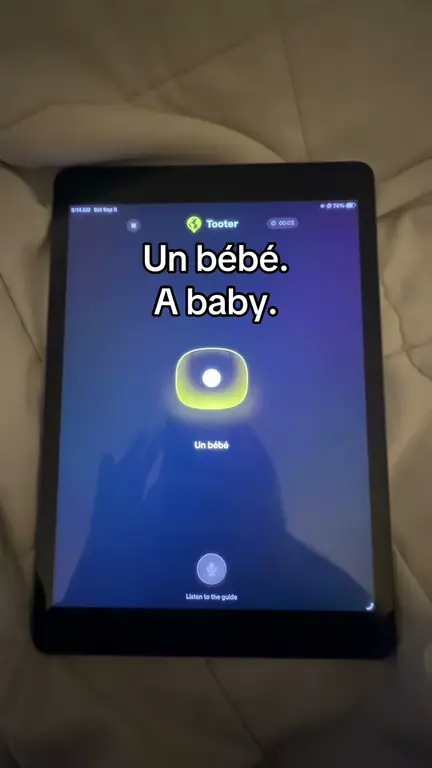 Learning French
- 112.3K likes
- 1.4K comments
- 128.7K shares
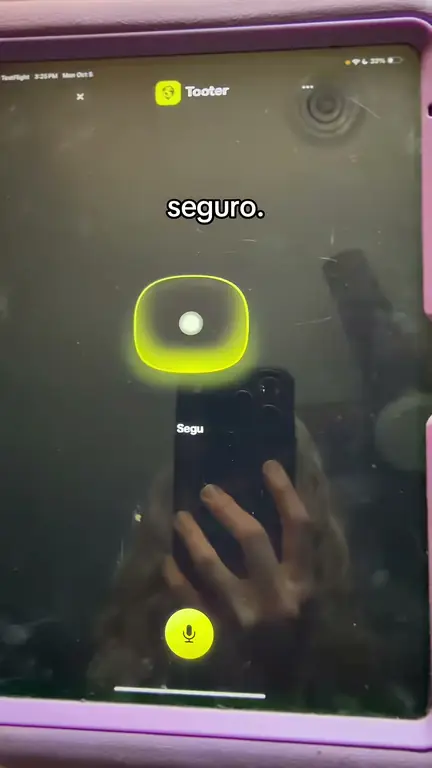 Learning Spanish
- 102.8K likes
- 737 comments
- 22.9K shares
Real Tooter lessons, filmed by learners on TikTok
Lifelike AI tutors
You talk out loud with AI tutors who play real roles, like a cafe server, a shop owner or a new friend. Each one has a face and a voice, so it feels like a conversation, not a quiz.
Corrections while you speak
Your tutor points out pronunciation, grammar and word choice as you go, then lets you try again. You can ask for explanations in English when something is unclear.
Guided lessons
Short chapters with listening, translation, word ordering, matching and dialogue build the phrases you need before you use them with a tutor.
Spoken Saudi Arabic
Tooter's tutors speak Saudi Arabic, the everyday Arabic of Saudi Arabia, not formal Modern Standard Arabic. You practice the throat sounds, and the forms that change when you talk to a man or a woman, in real exchanges.
What is easy and hard about Arabic for English speakers
- Easier
The alphabet is smaller than it looks
28 letters. Most learners sound out simple words within a few weeks.
- Easier
No "is" or "are" in the present
أنا من أمريكا (ana min amrika) is simply "I from America."
- Takes practice
New sounds
ع, ح, خ, غ and ق come from the throat and have no English match.
- Takes practice
Gender everywhere
"You" and most verbs change when you talk to a man or a woman.
- Takes practice
Written and spoken Arabic differ
You read Standard Arabic but hear dialects. Most learners need some of both.
Arabic phrases, words and guides
Tap a bubble for the phrase, its audio and how to use it.
Say it out loud with an Arabic tutor
Lifelike AI tutors play the other person and correct you as you speak. Pick one to start.
Laylatravel-focusedPractice with Layla Amiraculture-richPractice with Amira Noorconfidence-buildingPractice with Noor  Salmanatural correctionPractice with Salma
 Yasminfluency-drivenPractice with Yasmin
 Hanascenario-ledPractice with Hana
 Farahrhythm-awarePractice with Farah
 Linaconversation-firstPractice with Lina
Questions learners ask
Is Arabic hard to learn?
For English speakers it is one of the harder languages: the US Foreign Service Institute puts Arabic in its hardest group. The script is easier than it looks; the new sounds, the grammar and the gap between written and spoken Arabic take the most time.
How long does it take to learn Arabic?
Most learners read the script slowly within a few weeks and manage simple, predictable conversations after several months of daily practice. The US Foreign Service Institute estimates about 88 weeks of full-time classroom study for an English speaker to reach professional working ability.
Should I learn Modern Standard Arabic or a dialect?
Start with Modern Standard Arabic if you mainly want to read, follow the news or study religious texts. If you want to talk with people, learn the dialect of the place or people you care about, ideally alongside the standard. They share the script and a lot of vocabulary.
Which Arabic does Tooter teach?
Tooter's AI tutors speak Saudi Arabic, so you practice the everyday spoken Arabic of Saudi Arabia, which shares a lot with the Arabic of neighboring Gulf countries. Tooter can explain things in English whenever you need it.
Can I learn Arabic online for free?
Yes. Free alphabet charts and videos, podcasts for learners, children's books with vowel marks and Arabic series with subtitles can take you a long way. What free resources rarely give you is regular speaking practice with feedback.
What is the best app to learn Arabic?
The best one is the one you use every day and that fits your goal. For conversation, pick an app that makes you speak out loud and corrects you, and check which Arabic it teaches. Tooter does this with AI tutors who speak Saudi Arabic.
How long does it take to learn the Arabic alphabet?
Most learners can recognize the 28 letters and sound out simple words within a few weeks of daily practice. Reading quickly, especially without vowel marks, takes longer and grows with your vocabulary.
Can you learn Arabic by speaking?
Speaking is one of the best ways to learn spoken Arabic, because it trains the new sounds and the everyday dialect forms at the same time. Pair it with learning the script so you can read signs, menus and messages.
Say your first Arabic words out loud.
Answer a few quick questions, then practice out loud with a tutor.
By the Tooter Editorial Team. Updated November 3, 2026. Tooter tutors are AI characters, not human teachers. Romanization follows a simple English transliteration.