 Tooter
How to learn French
To learn French, start with its sounds (nasal vowels, silent final letters) and the most common phrases, then speak out loud every day, even for 15 minutes. Add daily listening, one grammar point at a time, and real conversations as early as you can.
Practice it with a tutor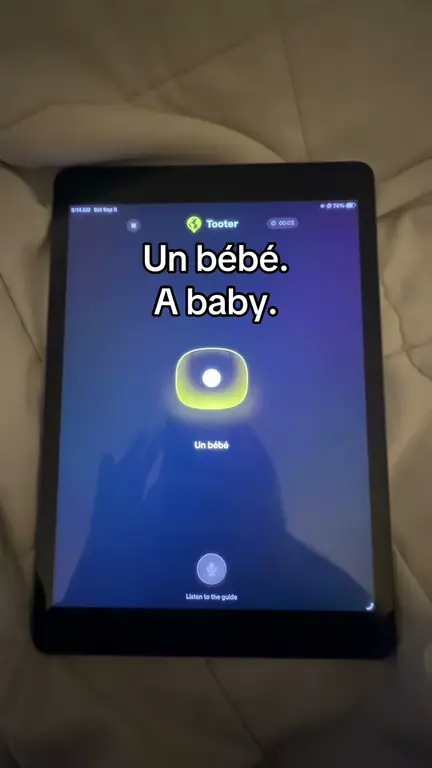 Learning French
- 112.3K likes
- 1.4K comments
- 128.7K shares
 Learning Spanish
- 102.8K likes
- 737 comments
- 22.9K shares
 Learning Korean
- 95.6K likes
- 1.5K comments
- 20.1K shares
Where do you need French most?
Pick one to start your plan. It takes about a minute.
What learning French really takes
Learning French comes down to four habits working together: hearing a lot of French, learning the most useful words and patterns, saying them out loud, and getting feedback on what you say. Reading about French helps, but only listening and speaking make it usable in a real conversation.
The good news for English speakers: French uses the same alphabet, shares thousands of words with English (restaurant, question, important) and builds basic sentences in a familiar order. The US Foreign Service Institute puts French in its easiest group, languages close to English, and estimates 30 weeks of full-time study to reach professional working proficiency.
The hard part is the gap between how French looks and how it sounds. Many final letters are silent, words run together through liaison (a silent final consonant carried over to the next word), and the nasal vowels and the French r are new to English speakers. Plan your time around listening and speaking, not just reading. Plenty of learners can read a menu but can't follow the waiter.
Decide which French you want to hear most. Most courses teach the standard French of France, which is understood everywhere. If you live near Quebec or plan to move there, learn to hear Quebec French too: the accent differs, and so do some everyday words. In Quebec, déjeuner (breakfast) is the morning meal, while in France the same word means lunch. Speakers from both sides understand each other, so you can't pick wrong.
Set a routine you can keep. Twenty minutes a day beats two hours once a week, because short, frequent sessions keep words fresh and make speaking feel normal instead of scary.
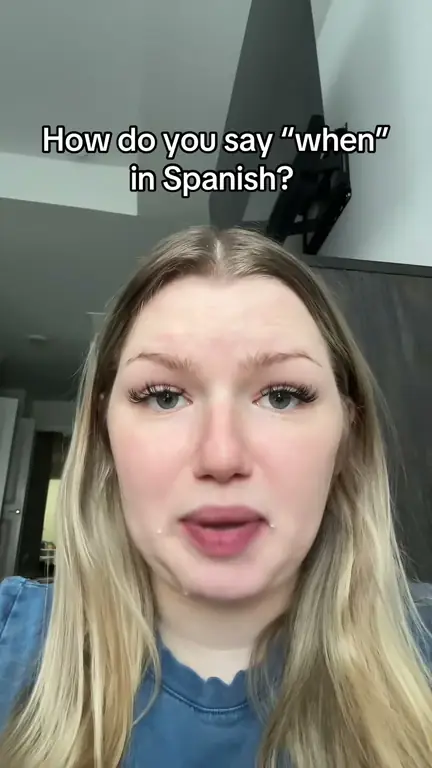
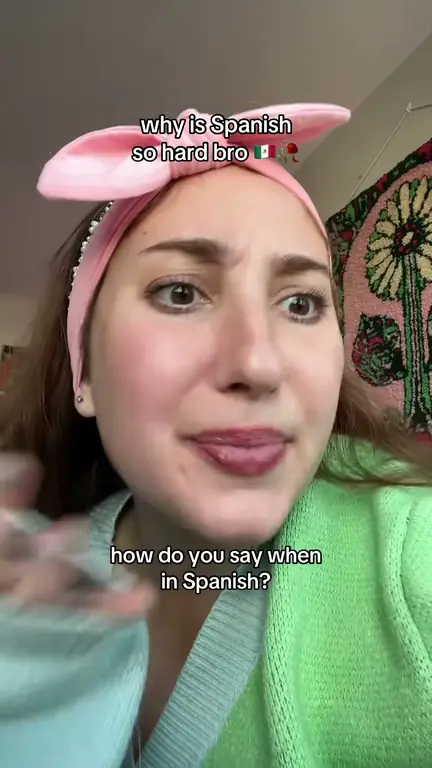
Learners film their Tooter practice
Real videos from Tooter creators practicing with their tutor. Public TikTok counts, October 26, 2026.
 Learning German
- 26.9K likes
- 694 comments
- 3.9K shares
 Learning Korean
- 9.3K likes
- 124 comments
- 912 shares
 Learning Spanish
- 1.5K likes
- 31 comments
- 526 shares
 Learning Korean
- 3K likes
- 68 comments
- 412 shares
 Learning Korean
- 3.2K likes
- 44 comments
- 367 shares
 Learning Spanish
- 777 likes
- 26 comments
- 201 shares
A plan for your first three months
A realistic pace for someone practicing about 20 to 30 minutes a day.
Month 1: sounds and survival phrases
Learn the French vowels (including the nasal ones), the French r and the habit of leaving most final consonants silent. Add about 100 high-frequency words and phrases: bonjour (hello), merci (thank you), s'il vous plaît (please), Où est... ? (Where is...?), days of the week and numbers to 100 (watch for soixante-dix, 70, literally "sixty-ten"). Say everything out loud. By the end of the month, aim to greet someone, introduce yourself and ask simple questions.
Month 2: the present tense and your own life
Learn the present tense of regular -er verbs like parler (to speak), the pattern most French verbs follow, then the key irregular ones: être (to be), avoir (to have), aller (to go), faire (to do, to make), vouloir (to want) and pouvoir (to be able to). Build vocabulary around your life: family, work, food, your town. Start short speaking sessions, even five minutes, where you answer questions about yourself.
Month 3: plans, the past and real conversations
Add the near future with aller plus a verb (je vais manger, I'm going to eat) and the passé composé (compound past), the everyday past tense: j'ai mangé (I ate), je suis allé (I went). Practice telling short stories about last weekend or tomorrow's plans. Speak several times a week and start listening to slow podcasts or shows with French subtitles.
After three months
Expect to handle simple conversations slowly, with mistakes and plenty of Pardon ? (Sorry?). That is normal, and it is progress. Keep speaking, add the imparfait (imperfect), the past tense for background and habits, and move your listening toward normal-speed French.
Pronunciation: the sounds that matter
French spelling looks unpredictable, but it follows patterns. Learn these early and every new word gets easier.
Silent final letters
Most final consonants aren't pronounced: petit (small) sounds like "puh-TEE" and vous (you) like "voo." A final e is usually silent too, but it makes you say the consonant before it, so petite (small, feminine) ends in a clear t. The letters c, r, f and l are often pronounced at the end (remember the word "careful"), as in parc (park), neuf (nine) and sel (salt).
Nasal vowels
In a nasal vowel, air goes through your nose and the n or m after it is not fully pronounced. You hear them in enfant (child), bon (good) and vin (wine). Lightly pinch your nose while you practice: if the sound changes, you're making it nasal.
The French r
The French r is made at the back of the throat, close to a soft gargle, not with the tip of the tongue like the English r. Keep your tongue tip resting behind your lower front teeth and practice with merci and rouge (red).
Liaison: words that run together
When a word ends in a silent consonant and the next word starts with a vowel, that consonant is often pronounced and carried over. Les amis (the friends) sounds like "lay-za-MEE" and vous avez (you have) like "voo-za-VAY." It's why spoken French can sound like one long word. Listen for it rather than memorizing every rule.
Quebec French sounds different
In Quebec, t and d before i or u often sound like ts and dz, so tu (you) can sound close to "tsu," and some vowels sound more open. Both accents are correct, and listening to both makes real-life French less surprising.
Grammar basics to learn first
Gender and articles
Every noun is masculine or feminine: le livre (the book), la table (the table). Before a vowel both become l', as in l'ami (the friend), which hides the gender, so learn each noun with un (a, masculine) or une (a, feminine): un livre, une table. Endings help (most words ending in -tion are feminine), but there are many exceptions.
Tu and vous
Both mean "you." Use tu with friends, family, children and people who invite you to use it. Use vous with strangers and in formal settings, whatever the other person's age, and whenever you talk to more than one person. If you're unsure, start with vous and switch when the other person suggests tu, often by asking On se tutoie ? (Shall we say tu?).
The passé composé with avoir or être
The everyday past tense uses a helper verb plus a past participle. Most verbs take avoir: j'ai parlé (I spoke). A short list of verbs, mostly about coming, going and changing state, take être: aller, venir, arriver, partir, entrer, sortir, monter, descendre, rester, tomber, naître and mourir. So je suis allé (I went) and je suis né (I was born), but j'ai marché (I walked). Reflexive verbs take être too: je me suis levé (I got up). With être the participle agrees with the subject, so a woman writes je suis allée. It sounds the same.
Negation in two parts
Ne goes before the verb and pas after it: je ne parle pas anglais (I don't speak English). In casual speech the ne often disappears: je parle pas anglais. Learn to recognize both, and use the full form when you write.
Speaking and listening practice
Speak from week one
Say every new phrase out loud, then use it in a short conversation as soon as you can. A language exchange partner, a teacher or an AI tutor like Tooter all work. Tooter's tutors play roles like a waiter or a shop owner, point out pronunciation, grammar and word choice as you talk, and can explain in English. What matters is answering in real time and getting corrected.
Shadow short clips
Play a few seconds of a native speaker, pause, and repeat it with the same rhythm and melody. French stresses the last syllable of each group of words rather than each word, and shadowing teaches that faster than any rule.
Listen a little above your level
Try podcasts for learners, children's shows, or a series you already know in English with French audio and French subtitles. Mix accents from France, Quebec, Belgium and West Africa so real speech doesn't throw you. You don't need every word; follow the main idea.
Read aloud
Graded readers, children's books and short news stories for learners all work. Reading aloud makes you decide which letters are silent and where words link, which is exactly the skill French spelling demands.
Talk to yourself
Describe what you're doing: Je fais du café (I'm making coffee), Je vais au travail (I'm going to work). It's free and private, and it builds the habit of thinking in French.
Common mistakes beginners make
Saying excité for excited
Je suis excité (literally "I'm excited") can sound sexual, or like you're worked up. Say J'ai hâte ! (I can't wait!) or Je suis très content (I'm really happy) instead.
Looking for books at the librairie
Une librairie is a bookstore. A library is une bibliothèque. Faux amis (false friends) like this one look like English words but mean something else.
Asking about préservatifs in food
Un préservatif is a condom. To ask about preservatives, say des conservateurs (preservatives).
Translating "I am hungry" word for word
French uses avoir (to have) for many states: J'ai faim (I'm hungry), J'ai froid (I'm cold), J'ai trente ans (I'm thirty years old). Je suis froid sounds like a comment on your personality.
Skipping bonjour
In France, walking into a shop or starting a question without bonjour can come across as rude. Open with Bonjour, madame (Hello, ma'am) or Bonjour, monsieur (Hello, sir), then ask.
Waiting until you feel ready
Nobody feels ready to speak. Mistakes show you what to fix next, and most people are patient with learners who try.
A simple weekly routine
About two and a half hours a week. Swap days around to fit your schedule.
| Day | What to do | Time |
|---|---|---|
| Monday | Learn 10 new words or phrases with un or une and say each one out loud in a sentence | 20 min |
| Tuesday | Speaking session: answer questions about yourself, your day and your plans | 20 min |
| Wednesday | Listen to a learner podcast or short video, then shadow one clip | 20 min |
| Thursday | Grammar: one small point (for example the passé composé with avoir or être), then say five sentences | 20 min |
| Friday | Speaking session: role-play a real situation, like ordering at a café or buying bread | 20 min |
| Saturday | Read a short text aloud, marking silent letters and liaisons, and review the week's words | 20 min |
| Sunday | Fun French: a film, songs or a recipe in French, or rest | 30 min |
Say it out loud with a French tutor
Lifelike AI tutors play the other person and correct you as you speak. Pick one to start.
 Camilleculture-richPractice with Camille
 Amelieconfidence-buildingPractice with Amelie
 Leanatural correctionPractice with Lea
 Manonfluency-drivenPractice with Manon
 Clarascenario-ledPractice with Clara
 Inesrhythm-awarePractice with Ines
 Julietteconversation-firstPractice with Juliette
 Noemietravel-focusedPractice with Noemie
 @liv.slowlyfluent
 @learningwith.emma
 @learningwith.michelle
Questions learners ask
How do I learn French by myself?
Set a daily routine you can keep, learn the most common words and phrases first, and say everything out loud from day one. Use free listening (podcasts, shows, music) to train your ear, and get regular speaking practice with feedback from a language partner, a teacher or an AI tutor.
How long does it take to learn French?
The US Foreign Service Institute estimates 30 weeks of full-time study (about 690 class hours) for English speakers to reach professional working proficiency. Each of those weeks is 23 class hours plus 17 hours of self-study. Simple conversations come much sooner with daily speaking practice.
Can I be fluent in French in 3 months?
Not for most people, if fluent means following native speakers at full speed on any topic. Even the full-time FSI estimate is 30 weeks. Three months of daily practice can get you to slow, simple conversations about yourself, your plans and everyday situations, which is a real milestone.
What is the 80/20 rule in French?
It's the Pareto principle applied to learning: spend most of your effort on the small set of words, phrases and grammar that come up most often. In French that means être (to be), avoir (to have), aller (to go) and faire (to do), greetings, numbers, question words and the present tense. The split is a rule of thumb, not a measurement.
Is French hard to learn?
For English speakers it's one of the easier languages. The FSI puts French in Category I, "languages close to English," thanks to the shared alphabet and thousands of shared words. The harder parts are pronunciation, silent letters, noun gender and verb endings, and all of them improve with listening and speaking.
How do you say 1 to 10 in French?
Un (1), deux (2), trois (3), quatre (4), cinq (5), six (6), sept (7), huit (8), neuf (9), dix (10). Said on their own, six and dix end in an s sound ("sees," "dees"), and huit sounds like "weet."
Can I learn French in 10 days?
Not the language, but you can learn enough for a trip: greetings, please and thank you, numbers, ordering food, asking for directions and Vous parlez anglais ? (Do you speak English?). Say them out loud every day so they come out when you need them.
What is the fastest way to learn French?
Speak every day, even for 15 minutes, and get corrected. Focus on the words and grammar you will actually use, listen to French daily, and rehearse real situations out loud. With Tooter you can practice with an AI tutor on iPhone or the web, in sessions of 5 to 30 minutes.
Start your French routine today.
Answer a few quick questions, then practice out loud with a tutor.
Updated October 28, 2026. Tooter tutors are AI characters, not human teachers.