 Tooter
Learn Russian by speaking
To learn Russian you can actually use, read Cyrillic first (it takes days), learn a few polite phrases like Здравствуйте (zdravstvuyte, hello) and Спасибо (spasibo, thank you), and say them out loud from your first week. Speaking early trains the stress, the sounds and the word endings together.
Practice it with a tutor Live
 Live
 Live
Where do you need Russian?
Pick one to start your plan. It takes about a minute.
Why learn Russian by speaking
- Hello: Здравствуйте (zdravstvuyte)
Russian is the most widely spoken Slavic language and one of the six official languages of the United Nations. You hear it across much of Eastern Europe, the Caucasus and Central Asia, so one language opens a very large map.
Many learners can sound out Cyrillic within a week and still freeze when someone answers them. The gap is practice, not talent. Russian stress is not written in normal text, and it changes how vowels sound: молоко (moloko, milk) is said "ma-la-KO." You only get stress right by hearing words and saying them out loud many times.
Speaking also makes the grammar stick. Russian word endings change with each word's role in a sentence (the cases), and you learn them faster in phrases you actually say, like в Москве (v Moskve, in Moscow), than from a table. You don't need to master the cases before you talk. A few phrases and five to fifteen minutes of speaking a day will take you further than hours of silent review.
Your first five Russian phrases
Polite enough for anyone you meet. Say each one out loud a few times, with the stress where the note shows it.
The safe hello for strangers, staff and older people. The first в is silent: ZDRAST-vuy-tye.
Works with anyone. Stress on the second syllable: spa-SI-bo, said closer to spa-SEE-ba.
Literally "they call me." Add your name. Stress: mi-NYA za-VUT.
To get someone's attention or to apologize. Stress: iz-vi-NI-tye.
Your best friend as a beginner. Stress: pav-ta-RI-tye, pa-ZHA-lu-sta.
How Tooter teaches Russian
Learn Russian online or on your phone: short Russian lessons for beginners first, then speaking practice out loud with an AI tutor.
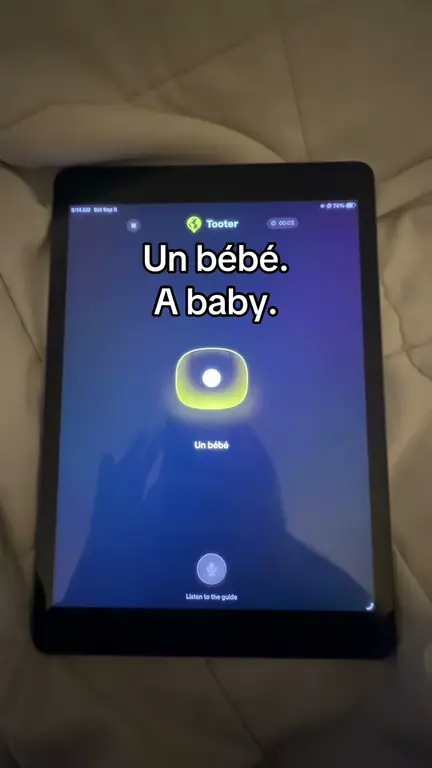 Learning French
- 112.3K likes
- 1.4K comments
- 128.7K shares
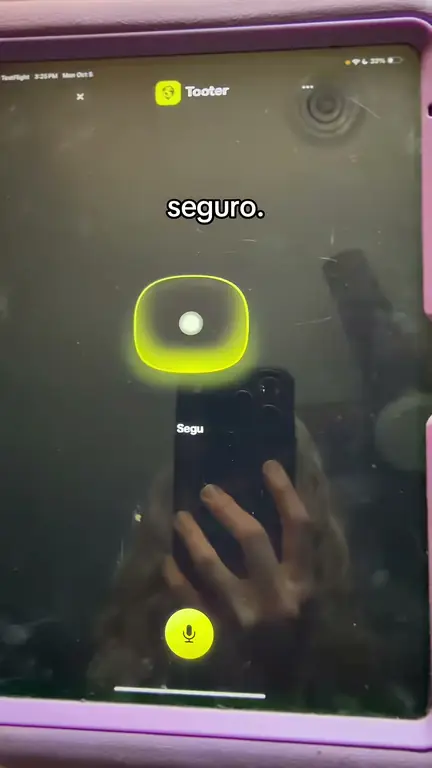 Learning Spanish
- 102.8K likes
- 737 comments
- 22.9K shares
Real Tooter lessons, filmed by learners on TikTok
Lifelike AI tutors
You talk out loud with AI tutors who play real roles, like a cafe server, a hotel receptionist or a new colleague. Each one has a face and a voice and speaks standard Russian, so it feels like a conversation, not a quiz.
Corrections while you speak
Your tutor points out pronunciation, stress, grammar and word choice as you go, then lets you try again. You can ask for explanations in English whenever something is unclear.
Guided lessons
Short chapters with listening, translation, word ordering, matching and dialogue build the phrases you need before you use them with a tutor, in sessions of 5 to 30 minutes.
Cases and stress in practice
Russian endings change with each word's role, and stress moves between forms. You practice them in real exchanges, like asking for things and saying where you are, until the right ending and the right stress become habits.
What is easy and hard about Russian for English speakers
- Easier
A short alphabet
33 letters, and some, like А, К, М, О and Т, look and sound close to English.
- Easier
No articles, no "am"
No "a" or "the": Я студент (ya student) means "I'm a student."
- Easier
Familiar words
Many words are borrowed: телефон (telefon), такси (taksi), ресторан (restoran).
- Takes practice
Six cases
Endings change with a word's role: Москва, в Москве, из Москвы.
- Takes practice
Stress and sounds
Stress isn't marked and it changes vowels. Ы and the rolled р are new.
- Takes practice
Verb pairs
Most verbs come in pairs, like делать and сделать (to do, to get done).
Russian phrases, words and guides
Tap a bubble for the phrase, its audio and how to use it.
Say it out loud with a Russian tutor
Lifelike AI tutors play the other person and correct you as you speak. Pick one to start.
Anyaconfidence-buildingPractice with Anya Irinanatural correctionPractice with Irina Dariafluency-drivenPractice with Daria  Katyascenario-ledPractice with Katya
 Milarhythm-awarePractice with Mila
 Veraconversation-firstPractice with Vera
 Alinatravel-focusedPractice with Alina
 Nadiaculture-richPractice with Nadia
Questions learners ask
Is Russian hard to learn for English speakers?
Parts of it are. The alphabet takes days and there are no articles, but the six cases, moving stress and verb pairs take steady practice. The US Foreign Service Institute estimates about 44 weeks of full-time study for Russian, compared with about 24 weeks for Italian.
How long does it take to learn Russian?
Reading Cyrillic takes a few days to a week. Simple everyday conversations take months of daily practice, and the US Foreign Service Institute estimates about 44 weeks of full-time classroom study for English speakers to reach professional working ability.
What is the best way to learn Russian?
Learn Cyrillic first, then whole phrases with their stress, and say them out loud from your first week. Pick up grammar one case at a time in sentences you actually use, and get regular feedback on your speaking.
Can you learn Russian by speaking?
Yes, and speaking is the fastest way to get stress, sounds and endings into your mouth. Pair it with daily reading of Cyrillic and a little grammar study, because Russian endings are easier to hear once you know what to listen for.
What is the best app to learn Russian?
The one you open every day and that makes you talk, not just tap answers. Look for out-loud speaking practice with corrections. Tooter does this with lifelike AI tutors on iPhone and the web, and its tutors speak standard Russian.
Which Russian should I learn?
Standard Russian. Regional differences in Russian are fairly small, mostly accent and a few words, and the standard language of news, films and books is understood everywhere Russian is spoken.
Can I learn Russian online for free?
Yes, you can get far for free: alphabet charts with audio, podcasts for learners, series with subtitles, graded readers and language exchanges. What free resources rarely give you is regular speaking practice with someone who corrects you.
How long does it take to learn the Russian alphabet?
Most beginners can read Cyrillic slowly after a few days to a week. Some of the 33 letters look and sound like English (А, К, М, О, Т), some look familiar but sound different (В is v, Н is n, Р is r, С is s), and the rest are new.
Say your first Russian words out loud.
Answer a few quick questions, then practice out loud with a tutor.
By the Tooter Editorial Team. Updated November 3, 2026. Tooter tutors are AI characters, not human teachers. Romanization follows a simple English transliteration.