 Tooter
Learn Portuguese by speaking
To learn Portuguese you can actually use, choose European or Brazilian Portuguese first, learn a handful of everyday phrases like olá (hello) and obrigado (thank you), and say them out loud in short conversations from your first week. Speaking early trains your ear for nasal vowels and fast, clipped speech.
Practice it with a tutor Live
 Live
 Live
Where do you need Portuguese?
Pick one to start your plan. It takes about a minute.
Why learn Portuguese by speaking
- Hello: Olá
Portuguese is spoken by more than 200 million people in Brazil alone, and it is an official language in Portugal, Angola, Mozambique, Cape Verde and several other countries. Before you start, decide which Portuguese you want: European Portuguese (Portugal) or Brazilian Portuguese. They share their grammar and most of their words, and their speakers understand each other, but they sound noticeably different.
Many English speakers can read a Portuguese menu long before they can follow the waiter. Written Portuguese looks friendly, full of words like importante and informação, but spoken Portuguese runs words together, and in Portugal unstressed vowels almost disappear. The fix is hearing real speech and answering it, a little every day.
Speaking early also trains the sounds English doesn't have: the nasal vowels in não and mãe, and a strong r, as in rua (street), that sits at the back of the throat in Lisbon and sounds close to an English h in Rio. Short daily practice out loud shapes your accent before English habits settle in.
Your first five Portuguese phrases
All five work in Portugal and Brazil. Where the two countries differ, the note says what Brazilians say.
The standard hello in Portugal, fine with anyone. Brazilians understand it, but oi is their everyday hi.
Men say obrigado and women say obrigada: it agrees with the person speaking. The same in Brazil.
Put your name in place of Sam. In Portugal me goes after the verb; Brazilians usually say Meu nome é Sam or Me chamo Sam.
In Portugal this gets you an espresso. Por favor (please) is the same in both countries.
Polite with anyone in both countries, and the phrase a beginner needs most.
How Tooter teaches Portuguese
Learn Portuguese online or in the app: short Portuguese lessons for beginners first, then speaking practice out loud with an AI tutor.
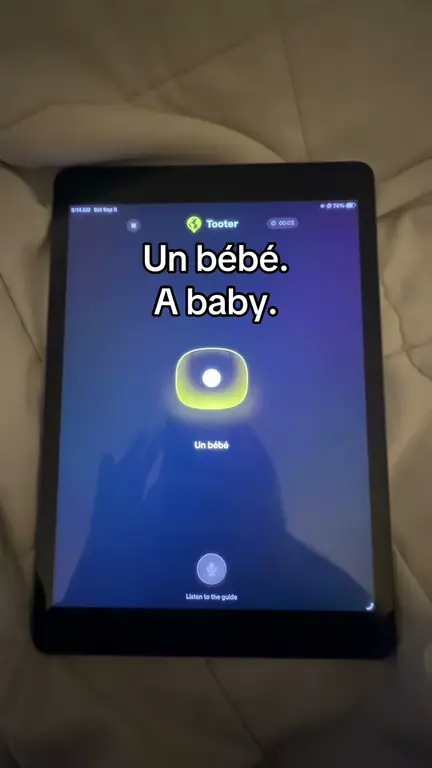 Learning French
- 112.3K likes
- 1.4K comments
- 128.7K shares
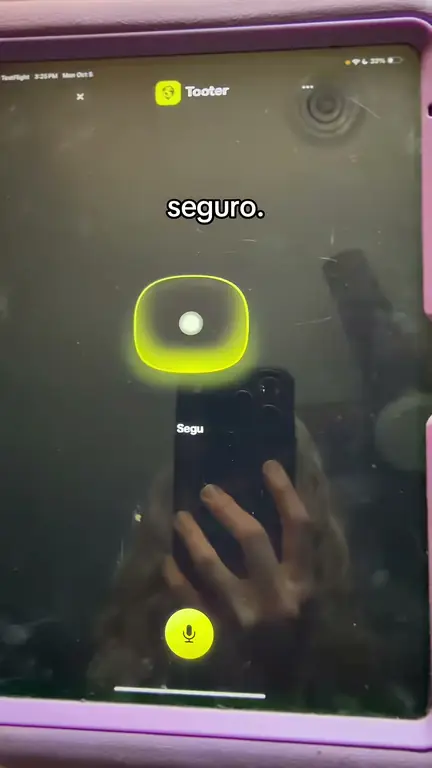 Learning Spanish
- 102.8K likes
- 737 comments
- 22.9K shares
Real Tooter lessons, filmed by learners on TikTok
Lifelike AI tutors
You talk out loud with AI tutors who play real roles, like a cafe owner in Lisbon or a new coworker. Each one has a face and a voice, so it feels like a conversation, not a quiz.
Corrections while you speak
Your tutor points out pronunciation, grammar and word choice as you go, then lets you try again. You can ask for explanations in English whenever something is unclear.
Guided lessons
Short chapters with listening, translation, word ordering, matching and dialogue build the phrases you need before you use them with a tutor, in sessions of 5 to 30 minutes.
European Portuguese, out loud
Tooter's tutors speak European Portuguese, as spoken in Portugal, with its clipped vowels and nasal sounds. You hear them and copy them in real situations, so Tooter fits best if Portugal is where you will use your Portuguese.
What is easy and hard about Portuguese for English speakers
- Easier
Familiar words
Hospital, importante, possível: Latin roots make a lot of Portuguese readable from day one.
- Easier
Questions by tone
Fala inglês? means "Do you speak English?" Just raise your voice at the end.
- Takes practice
Nasal vowels
Não, pão and mãe push air through the nose. English has nothing quite like them.
- Takes practice
Verb endings
Endings change with the person and the tense: falo, falas, fala, falamos, falam.
- Takes practice
Fast speech in Portugal
Unstressed vowels shrink, so words sound much shorter than they look.
Portuguese phrases, words and guides
Tap a bubble for the phrase, its audio and how to use it.
Say it out loud with a Portuguese tutor
Lifelike AI tutors play the other person and correct you as you speak. Pick one to start.
Ananatural correctionPractice with Ana Inesfluency-drivenPractice with Ines Sofiascenario-ledPractice with Sofia  Beatrizrhythm-awarePractice with Beatriz
 Marianaconversation-firstPractice with Mariana
 Leonortravel-focusedPractice with Leonor
 Martaculture-richPractice with Marta
 Claraconfidence-buildingPractice with Clara
Questions learners ask
Is Portuguese hard to learn?
For English speakers it is one of the easier languages: the US Foreign Service Institute puts it in its easiest group. The hard parts are the nasal vowels, the verb endings and, in European Portuguese, fast speech with swallowed vowels.
How long does it take to learn Portuguese?
The US Foreign Service Institute estimates about 24 weeks of full-time classroom study for an English speaker to reach professional working ability. Studying 20 to 30 minutes a day, simple everyday conversations are realistic within a few months, and fluency takes years.
Should I learn European or Brazilian Portuguese?
Learn the one you will use. Choose European Portuguese for Portugal, and Brazilian Portuguese for Brazil, Brazilian friends or the most music, shows and learner content. Grammar and most words are shared, so understanding the other variety later is much easier than starting over.
Can you learn Portuguese by speaking?
Yes, and it is the most direct way to get comfortable in real conversations. Learn whole phrases, say them out loud every day and get corrected; grammar makes more sense once you have a few sentences to hang it on.
What is the best app to learn Portuguese?
The best one is the app you use every day and that makes you speak, not just tap. Check which variety it teaches before you start. Tooter has you talk out loud with AI tutors who correct you as you speak.
Can I learn Portuguese for free?
Yes, free habits go a long way: podcasts for learners, series with Portuguese subtitles, music, simple news and shadowing. A language exchange adds free speaking practice. Choose content from the variety you are learning so your ear gets used to one accent first.
Is Portuguese similar to Spanish?
On paper, yes: much of the vocabulary and grammar overlaps, so Spanish speakers can read a lot of Portuguese. The sounds are quite different, so Spanish helps your reading more than your listening. Watch for false friends like esquisito, which means strange, not exquisite.
Does Portuguese use the same alphabet as English?
Yes, the same 26 letters (k, w and y appear mostly in foreign words), plus accent marks: á, â, ã, à, é, ê, í, ó, ô, õ, ú and the ç, which sounds like s (praça, square). The tilde in ã and õ marks a nasal vowel, as in não.
Say your first Portuguese words out loud.
Answer a few quick questions, then practice out loud with a tutor.
By the Tooter Editorial Team. Updated November 3, 2026. Tooter tutors are AI characters, not human teachers.