 Tooter
Learn Chinese (Mandarin) by speaking
To learn Chinese you can actually use, start with pinyin and the four tones of Mandarin, learn a few everyday phrases like 你好 (nǐ hǎo), and say them out loud from your first week. Characters can come a few at a time; speaking early is what trains your ear and your tones.
Practice it with a tutor Live
 Live
 Live
Where do you need Chinese?
Pick one to start your plan. It takes about a minute.
Why learn Chinese by speaking
- Hello: 你好 (nǐ hǎo)
When people say they want to learn Chinese, they almost always mean Mandarin: the standard language of mainland China and Taiwan and one of the official languages of Singapore. Spoken Mandarin is friendlier than its reputation. Verbs never change, there are no genders or articles, and basic sentences follow the same order as English.
The real hurdle for English speakers is tones. The pitch of a syllable changes its meaning, so mā (妈, mom) and mǎ (马, horse) are different words. You can't learn tones from a chart. They settle in only after you have said them out loud many times and heard someone respond, so speaking from week one matters even more in Chinese.
Speaking first also takes the pressure off characters. Pinyin, the official way to write Mandarin sounds in Latin letters, lets you speak before you can read much. Learn a few characters a day on the side and keep talking: five to fifteen minutes out loud a day beats hours of silent flashcards.
Your first five Chinese phrases
Polite enough for anyone you meet. Say each one out loud a few times, and copy the tones.
Said ní hǎo: when two third tones meet, the first one rises. With older people, 您好 (nín hǎo) is more respectful.
A sharp falling tone on the first syllable; the second is short and light (the neutral tone).
Put your name after 叫. Before any tone except another third tone, 我 is said low, without rising at the end.
Point at a menu item or product. Direct, but normal and not rude in shops and restaurants. You'll also hear 这个 said zhèige.
Your best friend as a beginner. 一 (yī) rises to yí before a fourth tone like 遍 (biàn).
How Tooter teaches Chinese
Learn Chinese online or on your phone: short Mandarin lessons first, then conversation practice out loud with an AI tutor.
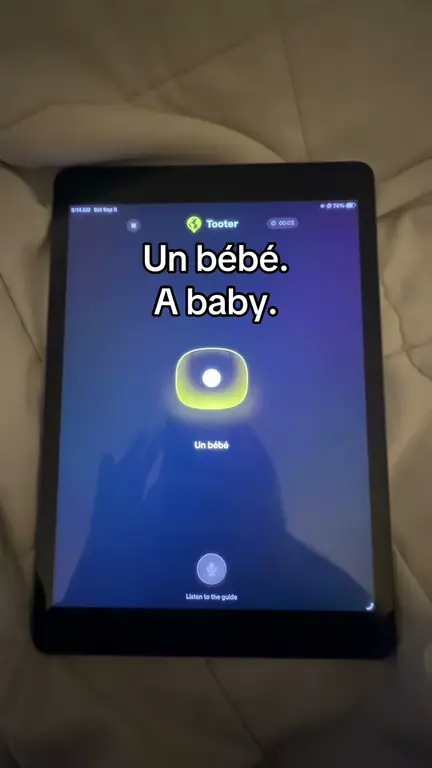 Learning French
- 112.3K likes
- 1.4K comments
- 128.7K shares
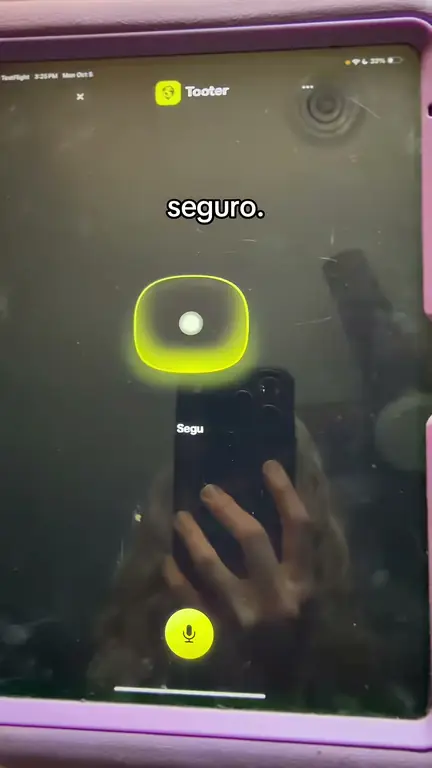 Learning Spanish
- 102.8K likes
- 737 comments
- 22.9K shares
Real Tooter lessons, filmed by learners on TikTok
Lifelike AI tutors who speak Mandarin
You talk out loud with AI tutors who play real roles, like a server at a noodle shop or a new friend from class. Each one has a face and a voice, so it feels like a conversation, not a quiz.
Corrections while you speak
Your tutor points out pronunciation, grammar and word choice as you go, then lets you try again. You can ask for explanations in English when something is unclear.
Guided lessons
Short chapters with listening, translation, word ordering, matching and dialogue build the phrases you then use with a tutor, in sessions of 5 to 30 minutes.
Tones in whole sentences
In real speech, third tones change next to each other and 不 and 一 shift with the next word. You say them in full sentences with a tutor until the right pitch comes without thinking.
What is easy and hard about Chinese for English speakers
- Easier
Verbs never change
我去, 你去, 他去 (wǒ qù, nǐ qù, tā qù): I go, you go, he goes. No endings to learn.
- Easier
Familiar word order
Basic sentences run like English: 我喝茶 (wǒ hē chá), I drink tea.
- Takes practice
Tones
妈 mā, 麻 má, 马 mǎ and 骂 mà mean mom, hemp, horse and scold.
- Takes practice
Characters
There is no alphabet. Each character is learned on its own, a few at a time.
- Takes practice
Few shared words
Beyond loanwords like 咖啡 (kāfēi, coffee), almost every word is new.
Chinese phrases, words and guides
Tap a bubble for the phrase, its audio and how to use it.
- How to learn Chinese (Mandarin)
- 你好How to say hello in Chinese
- 谢谢How to say thank you in Chinese
- 新年快乐How to say happy new year in Mandarin Chinese
- 我爱你How to say I love you in Chinese
- 生日快乐How to say happy birthday in Chinese
- 汉字The Chinese alphabet: pinyin and characters
- Chinese numbers: how to count in Mandarin
- Best apps to learn Chinese
Say it out loud with a Chinese tutor
Lifelike AI tutors play the other person and correct you as you speak. Pick one to start.


Questions learners ask
Is Chinese hard to learn for English speakers?
Parts of it are easy: verbs don't change, there is no grammatical gender and basic word order is like English. Tones, characters and the new vocabulary are the hard parts, which is why the US Foreign Service Institute puts Mandarin in its hardest group for English speakers.
How long does it take to learn Chinese?
Pinyin and the tones take a few weeks to get comfortable with, and simple everyday conversations take months of steady practice. The US Foreign Service Institute estimates about 88 weeks of full-time classroom study for English speakers to reach professional working ability in Mandarin.
Is Chinese the same as Mandarin?
Chinese is a family of languages, and Mandarin is the one most people mean: the standard language of mainland China and Taiwan and the most widely spoken. Cantonese, spoken in Hong Kong and Guangdong, is a separate language with different sounds. Tooter's tutors speak Mandarin.
Should I learn simplified or traditional characters?
Learn simplified characters if you are focused on mainland China or Singapore, and traditional if you are focused on Taiwan or Hong Kong. Many common characters are the same in both, and learning to read the other set later is far easier than starting from zero.
Can you learn Chinese just by speaking?
You can learn to speak Mandarin well before you read much, because pinyin shows you every sound and tone in Latin letters. To read signs, menus and messages you will still need characters, so add a few a day alongside your speaking practice.
What is the best way to learn Chinese as a beginner?
Start with pinyin and the four tones, learn whole everyday phrases, and say them out loud every day from the first week. Add daily listening, a few characters at a time and regular speaking practice with feedback from a partner, a teacher or an AI tutor.
Can I learn Chinese online for free?
Yes, you can get far with free resources: pinyin charts with audio, podcasts for learners, graded readers, series with Chinese subtitles and language exchanges. What free resources rarely give you is regular speaking practice where someone hears your tones and corrects them.
What is the best app to learn Chinese?
The best one is the one you use every day and that fits your goal. If you want to speak, pick one that has you talking out loud and corrects your pronunciation. Tooter does this with AI tutors who speak Mandarin.
Say your first Mandarin words out loud.
Answer a few quick questions, then practice out loud with a tutor.
By the Tooter Editorial Team. Updated November 3, 2026. Tooter tutors are AI characters, not human teachers. Romanization follows Hanyu Pinyin.