 Tooter
How to say yes in Korean
Yes in Korean is 네 (ne). It is polite and works with anyone. 예 (ye) is a more formal yes, and with close friends you can say 응 (eung). To agree to a plan, say 좋아요 (joayo), sounds good.
Practice it with a tutor Learning Korean
- 95.6K likes
- 1.5K comments
- 20.1K shares
 Learning French
- 112.3K likes
- 1.4K comments
- 128.7K shares
 Learning Spanish
- 102.8K likes
- 737 comments
- 22.9K shares
Where will you say 네 in Korean?
Pick one to start your plan. It takes about a minute.
Every way to say yes in Korean
네 (ne) is the everyday polite yes in Korean, fine with anyone. 예 (ye) sounds more formal, for bosses and customer service, while 응 (eung) is only for close friends and family.
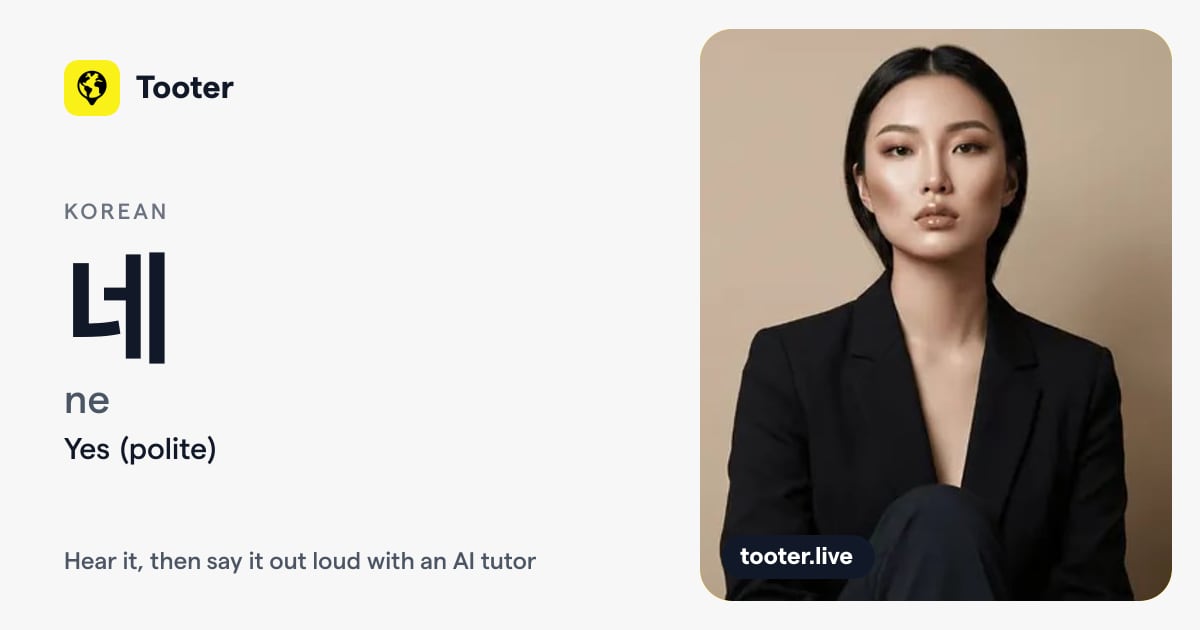
The everyday default. Also means okay or I see while you listen.
More formal. Common with bosses, elders, in the military and in customer service.
Close friends, family and kids.
Very casual and quick, between friends.
Use it to agree with a statement.
Agreeing to a plan or suggestion.
At work or with staff, when you accept an instruction.
Friends and family. The polite form is 알았어요 (arasseoyo).
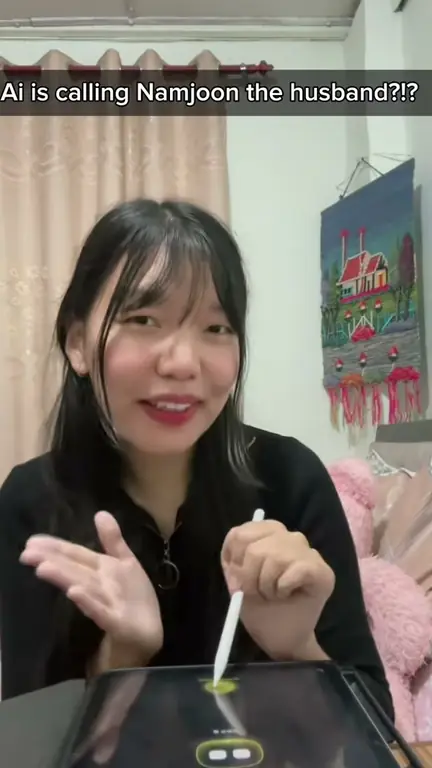
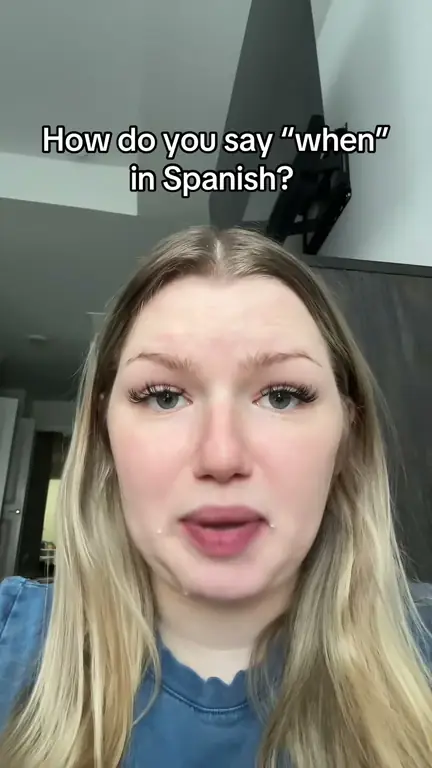
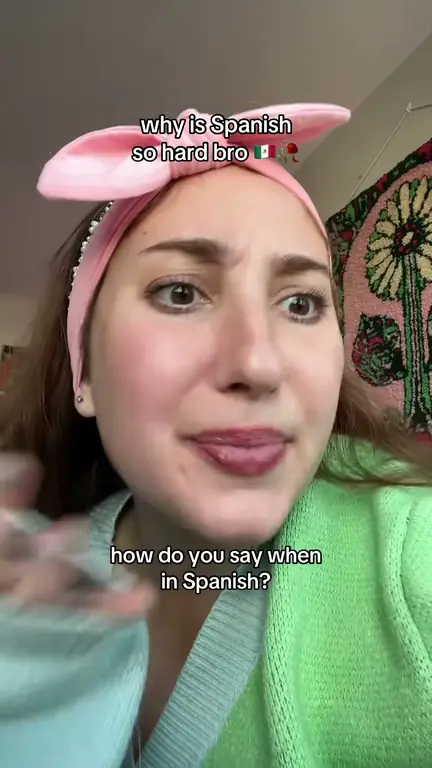
Learners film their Tooter practice
Real videos from Tooter creators practicing with their tutor. Public TikTok counts, October 26, 2026.
 Learning Korean
- 9.3K likes
- 124 comments
- 912 shares
 Learning Korean
- 3K likes
- 68 comments
- 412 shares
 Learning Korean
- 3.2K likes
- 44 comments
- 367 shares
 Learning German
- 26.9K likes
- 694 comments
- 3.9K shares
 Learning Spanish
- 1.5K likes
- 31 comments
- 526 shares
 Learning Spanish
- 777 likes
- 26 comments
- 201 shares
Saying yes at a restaurant
You order lunch at a small Korean restaurant.
When yes means no in Korean
Asked 배 안 고파요? (not hungry?), you answer 네 to mean "right, I'm not". 네 agrees with the question, not with the food.
More short lessons on Tooter's YouTube channel.

Okay, sure and of course
Yes to a plan, an offer or a fact often uses one of these instead of a bare 네.
- polite좋아요joayoSounds good
Yes to a plan or an offer.
- polite그럼요geureomyoOf course
- polite물론이죠mullonijyoOf course
A little more emphatic than 그럼요.
- polite알겠어요algesseoyoOkay, I see
You accept what you were told.
- polite네, 맞아요ne, majayoYes, that's right
- casual그래geuraeOkay, sure
With friends. The polite form is 그래요.
- casual당연하지dangyeonhajiOf course
Pick the best reply
Three moments that call for yes. In the last one, you haven't had lunch yet. Every reply is correct Korean; some just don't fit the moment.
How to pronounce 네
The Korean yes 네 (ne) is one short syllable that rhymes with meh. Said quickly, its ㄴ can sound close to a d, so you may hear deh; a rising 네? means pardon?
Short and light
네 sounds like "neh", rhyming with "meh". Keep it short. A long, falling 네~ sounds like a patient I see.
Why it can sound like de
At the start of a word, Korean ㄴ is often said with very little nasal sound, so a quick 네 can sound close to "deh". It is still 네.
A rising 네? means pardon?
Say 네? with a rising tone when you didn't catch something. It works like sorry? or what was that?
Yes agrees with the statement
Answering 안 먹었어요? (an meogeosseoyo?), you didn't eat?, with 네 means right, I didn't eat. Korean yes confirms what was said, which trips up English speakers.
Say it out loud with a Korean tutor
Lifelike AI tutors play the other person and correct you as you speak. Pick one to start.
 Minjiconversation-firstPractice with Minji
 Hanatravel-focusedPractice with Hana
 Jisooculture-richPractice with Jisoo
 Yunaconfidence-buildingPractice with Yuna
 Soranatural correctionPractice with Sora
 Jiwoofluency-drivenPractice with Jiwoo
 Nariscenario-ledPractice with Nari
 Sujinrhythm-awarePractice with Sujin
 @learningwith.emma
 @learningwith.michelle
Questions learners ask
How do you spell yes in Hangul?
Yes is 네, the letters ㄴ (n) and ㅔ (e). The formal 예 starts with ㅇ, silent at the start of a syllable. The Korean alphabet guide covers every letter.
Is yes in Korean ne or dae?
It is 네 (ne). Some people hear dae or de because a quick 네 is said with little nasal sound, but no one writes it that way.
Is 네 or 예 more polite?
Both are polite. 예 (ye) sounds more formal and is common at work, in the military and with elders. 네 is the everyday choice.
What does arasseo mean?
알았어 (arasseo) means okay or got it, said casually to friends and family. Add 요 for the polite 알았어요 (arasseoyo).
How do you say okay in Korean?
Say 네 (ne) or 알겠어요 (algesseoyo) to accept something politely. 좋아요 (joayo) means sounds good when agreeing to a plan.
What does eung mean in Korean?
응 (eung) is a casual yes or yeah, used with close friends, family and kids. With anyone else, say 네.
How do you answer yes to a negative question in Korean?
Korean yes agrees with the statement. If asked 안 먹었어요? (you didn't eat?) and you didn't, say 네, 안 먹었어요.
How can I practice yes and no in Korean?
Practice short replies out loud with a partner. Tooter's Korean tutors speak Seoul Korean and can play a waiter or a coworker while correcting your replies.
Practice 네 and 아니요 with a tutor.
Answer a few quick questions, then practice out loud with a tutor.
By the Tooter Editorial Team. Updated November 20, 2026. Tooter tutors are AI characters, not human teachers. Romanization follows Revised Romanization.