 Tooter
How to say no in Korean
No in Korean is 아니요 (aniyo), which is polite and safe with anyone. With close friends, say 아니 (ani). To politely turn down an offer, say 괜찮아요 (gwaenchanayo), which here means no thanks, I'm fine.
Practice it with a tutor Learning Korean
- 95.6K likes
- 1.5K comments
- 20.1K shares
 Learning French
- 112.3K likes
- 1.4K comments
- 128.7K shares
 Learning Spanish
- 102.8K likes
- 737 comments
- 22.9K shares
When will you need to say no?
Pick one to start your plan. It takes about a minute.
Every way to say no in Korean
아니요 (aniyo) is the polite Korean no that works with anyone. Close friends say 아니, formal settings use 아닙니다, and to turn down an offer politely Koreans prefer 괜찮아요, no thanks, over a bare no.
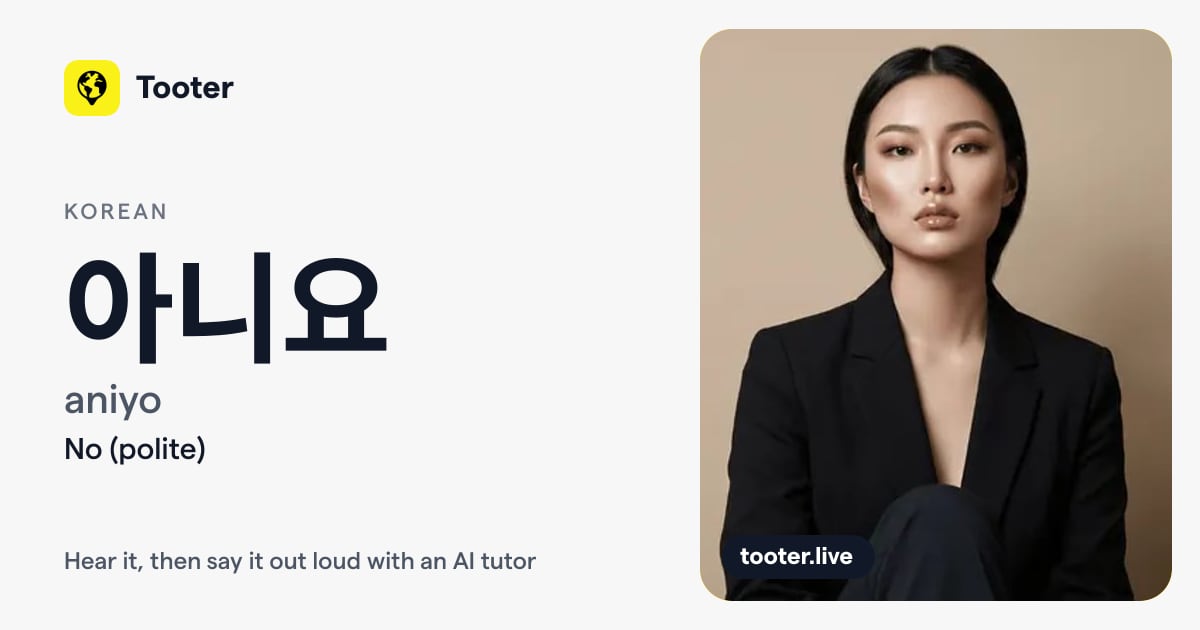
The safe default with anyone. On forms you may see 아니오, but in speech 아니요 is standard.
A shortened 아니요. Very common in everyday speech.
Close friends, family and kids.
Formal. Heard at work, in service jobs and the military.
The polite way to decline an offer, like a bag or a refill.
Fine with a smile, but it can sound curt if your tone is flat.
For rules and permission, not for offers.
Blunt. Close friends and family only.
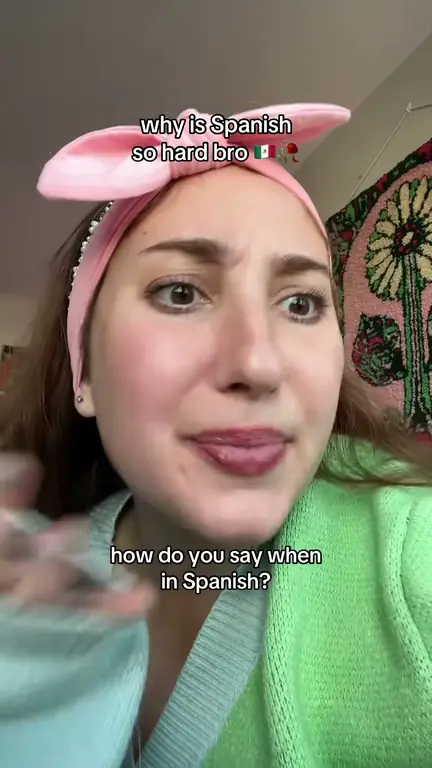
Learners film their Tooter practice
Real videos from Tooter creators practicing with their tutor. Public TikTok counts, October 26, 2026.
 Learning Korean
- 9.3K likes
- 124 comments
- 912 shares
 Learning Korean
- 3K likes
- 68 comments
- 412 shares
 Learning Korean
- 3.2K likes
- 44 comments
- 367 shares
 Learning German
- 26.9K likes
- 694 comments
- 3.9K shares
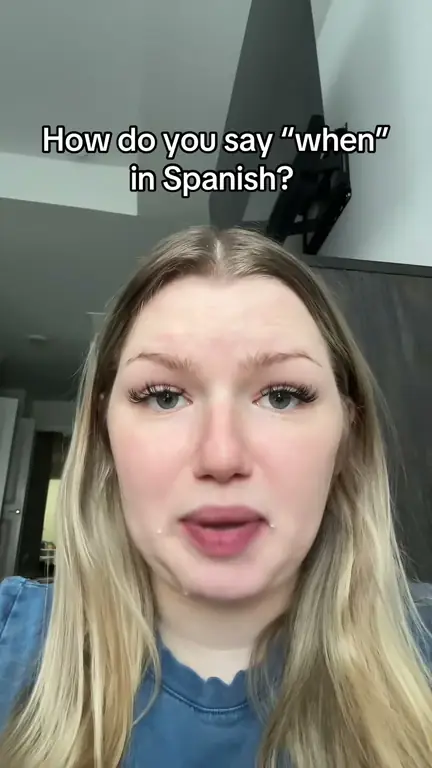 Learning Spanish
- 1.5K likes
- 31 comments
- 526 shares
 Learning Spanish
- 777 likes
- 26 comments
- 201 shares
Saying no thanks at a store
You pay at a convenience store. You don't need a bag, but you want the receipt.
When yes means no in Korean
Asked 배 안 고파요? (not hungry?), you answer 네 to mean "right, I'm not". 네 agrees with the question, not with the food.
More short lessons on Tooter's YouTube channel.

Polite ways to turn something down
- polite그건 좀...geugeon jom...That's a bit...
Trailing off is the hint.
- polite다음에요daeumeyoMaybe next time
- polite지금은 괜찮아요jigeumeun gwaenchanayoI'm okay for now
- polite어려울 것 같아요eoryeoul geot gatayoI don't think I can
Literally it seems difficult. Useful for invitations and requests.
- polite아니에요anieyoNot at all / It's not that
Also the modest reply to thanks or a compliment.
Pick the best reply
Three moments that call for no. You're full, the seat is taken, and you can't make it tomorrow. Every reply is correct Korean; some just don't fit the moment.
How to pronounce 아니요 and say no politely
아니요 (aniyo), the polite Korean no, has three level beats, a-ni-yo, with the voice falling gently on the last one. Its shortened spoken form 아뇨 (anyo) takes just two, a-nyo.
Three even beats
Say a-ni-yo with equal syllables and a gentle fall at the end. The quick 아뇨 is two beats: a-nyo.
The n starts the second beat
Say a-ni-yo, not an-ee-yo: the n belongs to 니, like the n in knee. In quick speech 니 and 요 run together, which is where the short form 아뇨 (anyo) comes from.
Pair it with 괜찮아요
아니요, 괜찮아요 is the polite no thanks. It sounds much softer than 아니요 alone.
Trail off to soften
Koreans often decline indirectly: 그건 좀... (geugeon jom...), that's a bit..., lets the listener understand without a hard no.
No disagrees with the statement
If someone asks 안 바빠요? (an bappayo?), aren't you busy?, and you are busy, the answer is 아니요, 바빠요: no, I'm busy. Korean no rejects what was said.
Say it out loud with a Korean tutor
Lifelike AI tutors play the other person and correct you as you speak. Pick one to start.
 Minjiconversation-firstPractice with Minji
 Hanatravel-focusedPractice with Hana
 Jisooculture-richPractice with Jisoo
 Yunaconfidence-buildingPractice with Yuna
 Soranatural correctionPractice with Sora
 Jiwoofluency-drivenPractice with Jiwoo
 Nariscenario-ledPractice with Nari
 Sujinrhythm-awarePractice with Sujin
 @learningwith.emma
 @learningwith.michelle
Questions learners ask
How do Koreans say no?
The polite word is 아니요 (aniyo), often shortened to 아뇨 (anyo). To decline an offer, people usually say 괜찮아요 (gwaenchanayo), meaning I'm fine, rather than a bare no.
Is it ani or aniyo?
Both are correct. 아니 (ani) is casual, for close friends, family and kids. 아니요 (aniyo) adds the polite 요 and is the one to use with strangers, whatever their age, and anyone older.
Is it aniyo or anio?
In speech, say 아니요 (aniyo). 아니오 is a different, old-fashioned form that you may still see on yes or no forms.
How do I reply to arasseo?
알았어 (arasseo) means okay, got it. You don't need a no or yes; a friendly 응 (eung) or 고마워 (gomawo), thanks, closes the exchange.
How do you say no thank you in Korean?
Say 아니요, 괜찮아요 (aniyo, gwaenchanayo). It is polite in shops, restaurants and when someone offers you more food. A Tooter tutor can play the shop clerk so you can practice it out loud.
What does an dwae mean in Korean?
안 돼 (an dwae) means no, you can't, or that's not allowed. It's for rules and permission; the polite form is 안 돼요 (an dwaeyo).
What does sireo mean?
싫어 (sireo) means I don't want to or I don't like it. It's blunt, so keep it for close friends and family.
How do you say no formally in Korean?
Say 아닙니다 (animnida), common at work and in service jobs. For everyday politeness, 아니요 is enough.
Practice saying 아니요 with a tutor.
Answer a few quick questions, then practice out loud with a tutor.
By the Tooter Editorial Team. Updated November 20, 2026. Tooter tutors are AI characters, not human teachers. Romanization follows Revised Romanization.