 Tooter
How to learn Korean
To learn Korean, start by reading Hangul, then learn polite everyday phrases with 요 endings and say them out loud from your first week. Add daily listening and short review sessions. Expect months to hold simple conversations and years to master the language.
Practice it with a tutor Learning Korean
- 95.6K likes
- 1.5K comments
- 20.1K shares
 Learning French
- 112.3K likes
- 1.4K comments
- 128.7K shares
 Learning Spanish
- 102.8K likes
- 737 comments
- 22.9K shares
Where do you need Korean?
Pick one to start your plan. It takes about a minute.
The short version
Korean has a reputation for being hard, and parts of it are. The grammar works differently from English, most words are new, and the way you speak changes with the person you are talking to. But the writing system is one of the easiest in the world to learn, and the basics of everyday conversation are within reach for any beginner who practices steadily.
The order matters. Learn to read Hangul first, because romanization will slow you down and teach you the wrong sounds. Then learn whole phrases you can use right away, not lists of isolated words. Start speaking out loud in the first week, even if it is just ten phrases. Grammar makes far more sense once you have a few sentences in your mouth to hang it on.
Most of all, keep sessions short and frequent. Twenty minutes a day beats a three-hour session once a week. Korean rewards repetition: hearing the same sounds, endings and particles again and again until they feel normal.
Learners film their Tooter practice
Real videos from Tooter creators practicing with their tutor. Public TikTok counts, October 26, 2026.
 Learning Korean
- 9.3K likes
- 124 comments
- 912 shares
 Learning Korean
- 3K likes
- 68 comments
- 412 shares
 Learning Korean
- 3.2K likes
- 44 comments
- 367 shares
 Learning German
- 26.9K likes
- 694 comments
- 3.9K shares
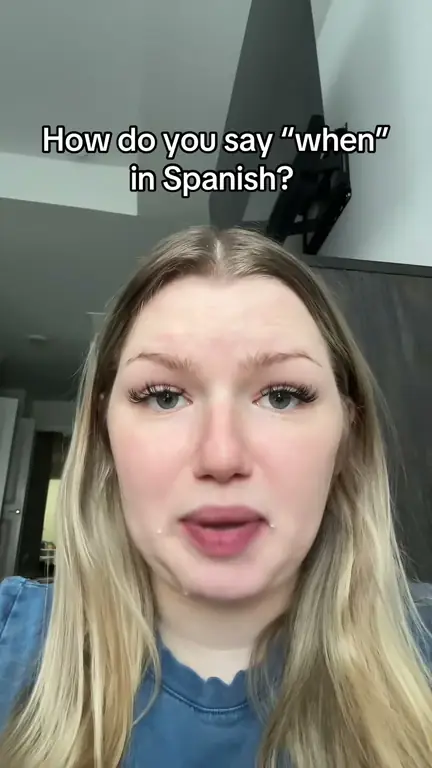 Learning Spanish
- 1.5K likes
- 31 comments
- 526 shares
 Learning Spanish
- 777 likes
- 26 comments
- 201 shares
A plan for your first three months
A realistic pace for someone studying 20 to 30 minutes a day. Adjust it to your schedule; consistency matters more than speed.
Week 1: Hangul
Learn the 14 basic consonants and 10 basic vowels, then how they stack into syllable blocks. Read slowly: signs, menus, K-pop lyrics, anything. Stop using romanization as soon as you can sound out words.
Month 1: survival phrases
Learn about 50 whole phrases: greetings, thank you, sorry, yes and no, ordering, asking for prices and saying you do not understand. Say each one out loud daily. Learn the numbers 1 to 10 in both counting systems.
Month 2: build sentences
Learn the subject-object-verb word order, the particles 은/는, 이/가 and 을/를, and the polite present, past and future endings. Start introducing yourself in a few sentences: your name, where you are from, your job or studies, what you like.
Month 3: real conversations
Practice short role plays: ordering in a cafe, taking a taxi, small talk with a coworker. Listen to slow Korean content daily and shadow it. By now you should be able to handle simple, predictable exchanges, with plenty of pauses, and that is a good result.
The writing system: learn Hangul first
Hangul was designed in the 15th century to be easy to learn, and it still is. Each letter stands for a sound, and letters group into square syllable blocks: ㅎ + ㅏ + ㄴ makes 한 (han), and 한 + 국 makes 한국 (hanguk, Korea). Once you know the letters and the stacking rules, you can sound out any word, even if you do not know what it means yet.
Focus on sounds English does not have. ㅓ (eo) and ㅡ (eu) are new vowels. Consonants come in groups of three, like ㄱ (plain), ㅋ (with a puff of air) and ㄲ (tense). Listen to native audio for every letter and copy it, rather than trusting the English spelling in romanization.
Grammar basics to learn first
The verb goes last
Korean is subject-object-verb: 저는 커피를 마셔요 (jeoneun keopireul masyeoyo) is literally "I coffee drink." Get used to waiting for the verb at the end.
Particles mark the role of each word
은/는 marks the topic, 이/가 the subject, 을/를 the object. You can be understood even when you mix them up, so learn them by example and do not let them stop you from speaking.
Start with polite 요 endings
Verbs end in 요 in polite everyday speech: 가요 (gayo, I go), 먹어요 (meogeoyo, I eat). This level is right with strangers, staff and coworkers. Learn formal 습니다 and casual speech later.
Leave things out
Koreans drop the subject when it is obvious. 배고파요 (baegopayo) alone means "I'm hungry." Your sentences can be shorter than in English.
Speaking and listening practice
Speak from week one
Say every phrase out loud, not in your head. Speaking builds the mouth habits for new sounds and makes vocabulary stick. A speaking partner or an AI tutor like Tooter lets you practice real exchanges and get corrected as you talk.
Shadow native audio
Play a short clip of slow Korean, pause after each sentence and repeat it, copying the rhythm and intonation. Five minutes a day of shadowing improves pronunciation and listening together.
Read simple texts
Children's books, graded readers, webtoons and subtitles on shows you already know are all good. Reading Hangul daily keeps it fast and shows you grammar in context.
Listen a little every day
Pick content made for learners first, then move to Korean shows with Korean subtitles. Do not expect to understand everything; train your ear to pick out words you know.
Review with spaced repetition
Use flashcards for the phrases you actually say, reviewing a few minutes a day. Add whole sentences, not just single words.
Common beginner mistakes
Staying on romanization
Romanization hides sounds like ㅓ and the tense consonants, and it makes reading signs and menus impossible. Switch to Hangul in the first week.
Using casual speech with strangers
Dramas and songs are full of casual 반말 (banmal), like 사랑해 or 고마워. With people you just met or anyone older, add 요 or use formal speech.
Translating word for word
English sentences rarely map onto Korean one to one. Learn how Koreans say things in whole phrases, like 잘 먹겠습니다 (jal meokgetseumnida) before a meal, instead of building them from English.
Only studying, never speaking
Many learners can read and recognize hundreds of words but freeze in a real conversation. Speak a little every day so talking feels normal before you need it.
A simple weekly routine
About 20 to 30 minutes a day. Swap days around as you like.
| Day | What to do | Time |
|---|---|---|
| Monday | Learn 5 to 10 new phrases and say each one out loud | 20 min |
| Tuesday | Speaking practice: one role play (cafe, shop, small talk) | 15 to 20 min |
| Wednesday | Grammar point of the week, then write 5 example sentences | 20 min |
| Thursday | Shadow a short audio clip, then flashcard review | 20 min |
| Friday | Speaking practice using the week's phrases and grammar | 15 to 20 min |
| Saturday | Read something simple and watch a show with Korean subtitles | 30 min |
| Sunday | Light review of the week's flashcards, or rest | 10 min |
Say it out loud with a Korean tutor
Lifelike AI tutors play the other person and correct you as you speak. Pick one to start.
 Minjiconversation-firstPractice with Minji
 Hanatravel-focusedPractice with Hana
 Jisooculture-richPractice with Jisoo
 Yunaconfidence-buildingPractice with Yuna
 Soranatural correctionPractice with Sora
 Jiwoofluency-drivenPractice with Jiwoo
 Nariscenario-ledPractice with Nari
 Sujinrhythm-awarePractice with Sujin
 @learningwith.emma
 @learningwith.michelle
Questions learners ask
How long does it take to learn Korean?
You can read Hangul in days to a couple of weeks, and handle simple, predictable conversations after a few months of daily practice. Comfortable fluency takes years: the US Foreign Service Institute puts Korean in its hardest group for English speakers, at about 88 weeks of full-time study.
How can I learn Korean faster?
Learn Hangul first, study whole phrases instead of word lists, and speak out loud every day from the first week. Short daily sessions with speaking, listening and review beat long weekly ones.
Is it easy to study Korean?
Parts of it are. The alphabet is quick to learn and there is no grammatical gender or verb conjugation for person. The harder parts are the word order, particles, politeness levels and the large amount of new vocabulary.
Can you learn Korean with an app?
Yes, an app can carry you a long way if you use it daily and it makes you speak, not just tap. Pair it with listening to real Korean and reading simple texts.
Which Korean learning app is best?
It depends on your goal. For reading and vocabulary, a flashcard or course app works. For speaking, pick one where you talk out loud and get corrected, such as Tooter's AI tutors.
How do I learn Korean by myself?
Learn Hangul from a free chart first, then learn whole phrases you'll actually use and say them out loud every day. Add Korean listening you enjoy, like shows or podcasts for learners, and get regular feedback on your speaking from a partner, a teacher or an AI tutor.
How do you say 1 to 10 in Korean?
Korean has two sets of numbers. Native Korean: 하나 (hana), 둘 (dul), 셋 (set), 넷 (net), 다섯 (daseot), 여섯 (yeoseot), 일곱 (ilgop), 여덟 (yeodeol), 아홉 (ahop), 열 (yeol), used for counting things and age. Sino-Korean: 일 (il), 이 (i), 삼 (sam), 사 (sa), 오 (o), 육 (yuk), 칠 (chil), 팔 (pal), 구 (gu), 십 (sip), used for dates, money and phone numbers.
What is Konglish?
Konglish is English words borrowed into Korean, often with a Korean twist: 핸드폰 (haendeupon, cell phone), 아이쇼핑 (aisyoping, window shopping) and 파이팅 (paiting, "you can do it!"). They give you a head start on vocabulary, but the meaning doesn't always match the English.
Start your first Korean conversation.
Answer a few quick questions, then practice out loud with a tutor.
Updated October 28, 2026. Tooter tutors are AI characters, not human teachers. Romanization follows Revised Romanization.