 Tooter
Spanish conversation practice
Practice Spanish conversation by saying real exchanges out loud: ordering at a cafe, asking for directions and introducing yourself. Read a dialogue, say your lines, pick the best reply in the practice round, then record yourself and compare. Use tú with friends and usted with strangers or older people.
Practice it with a tutor Learning Spanish
- 102.8K likes
- 737 comments
- 22.9K shares
 Learning French
- 112.3K likes
- 1.4K comments
- 128.7K shares
 Learning Korean
- 95.6K likes
- 1.5K comments
- 20.1K shares
Where will you speak Spanish?
Pick one to start your plan. It takes about a minute.
How to practice Spanish speaking on this page
Conversation is a skill you build by talking. Reading a dialogue helps a little. Saying your lines out loud helps much more, because your mouth learns the sounds and your brain learns to answer without translating.
Work through the page in order. Say every You line out loud, then swap and say the other person's lines. Next, pick a reply in the practice round. Finish with the sentences to record, and compare yourself with the model.
Each dialogue is labeled Spain or Latin America, because a few words change. Everything here is understood in both. Tooter's Spanish tutors speak Castilian Spanish, as spoken in Spain, and the tables below show what is different elsewhere.
Learners film their Tooter practice
Real videos from Tooter creators practicing with their tutor. Public TikTok counts, October 26, 2026.
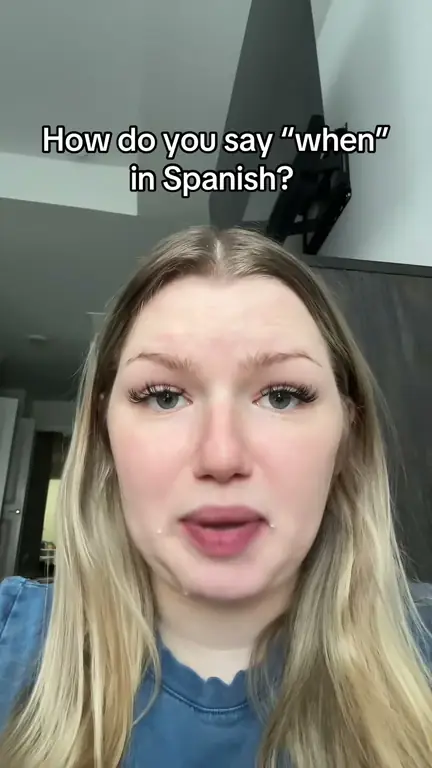 Learning Spanish
- 1.5K likes
- 31 comments
- 526 shares
 Learning Spanish
- 777 likes
- 26 comments
- 201 shares
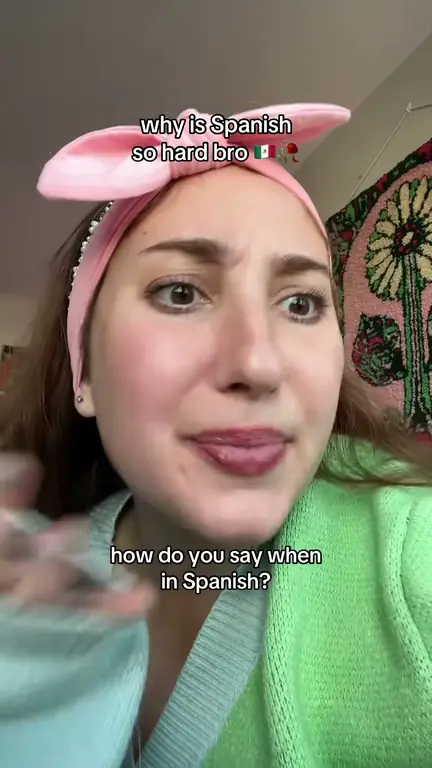 Learning Spanish
- 374 likes
- 10 comments
- 49 shares
 Learning German
- 26.9K likes
- 694 comments
- 3.9K shares
 Learning Korean
- 9.3K likes
- 124 comments
- 912 shares
 Learning Korean
- 3K likes
- 68 comments
- 412 shares
Spanish conversations to practice
Pick a situation. Play each line, then say it yourself.
At a cafe: ordering a coffee
A bar in Madrid, usted form. ¿Qué le pongo? is the classic line in Spain. In Latin America you'd hear ¿Qué le sirvo?
On the street: asking for directions
Mexico City, usted form with a stranger. In Spain, she would say todo recto, manzanas, gire and andando.
Meeting someone: introductions
Two people about the same age at a language exchange, tú form. This one works everywhere.
Pick the best reply
Someone speaks to you. Say each reply out loud, then pick the one that fits. Every reply is correct Spanish; some just don't fit the moment.
Tú vs usted: the same question, two ways
Use tú with friends, family, kids and people your age in casual settings. Use usted with strangers, older people and at work until invited to switch. In Argentina and Uruguay, friends say vos instead of tú (vos sos, vos tenés), but tú is understood there too.
| English | Tú | Usted |
|---|---|---|
| What's your name? | ¿Cómo te llamas? | ¿Cómo se llama? |
| How are you? | ¿Cómo estás? | ¿Cómo está? |
| Where are you from? | ¿De dónde eres? | ¿De dónde es? |
| Can you help me? | ¿Me ayudas? | ¿Me ayuda? |
| Excuse me | Perdona | Perdone |
| And you? | ¿Y tú? | ¿Y usted? |
Spain vs Latin America: what changes
Tooter's Spanish tutors speak Castilian Spanish, so with them you'll hear the Spain column. Speakers from both sides understand each other easily, and Latin American words vary by country.
| English | Spain | Latin America |
|---|---|---|
| Sound of c before e or i, and z | A th sound in most of Spain: gracias, cerveza | An s sound: gracias, cerveza |
| You all | vosotros (friends), ustedes (formal) | ustedes (everyone) |
| Straight ahead | todo recto | todo derecho |
| Block (street) | la manzana | la cuadra |
| Turn left | gira a la izquierda | dobla a la izquierda, da vuelta a la izquierda |
| On foot | andando | caminando |
| Cell phone | el móvil | el celular |
| Juice | el zumo | el jugo |
| OK | vale | está bien, dale (Argentina), órale (Mexico) |
Listen, record, compare
Play a sentence, say it right after, record yourself and listen to both. Copy the rhythm first and the sounds second.
OH-lah, keh TAHL. The h is silent and the stress lands on tal.
The ll sounds like the y in yes for most speakers.
Stress the end of café and favor: kah-FEH, fah-VOR.
The written accents show the stress: DOHN-deh, ehs-TAH, ehs-tah-SYOHN.
Run the two words together: noh-en-TYEN-doh.
Keep every vowel short and clean. The h in hablar is silent.
In most of Spain the c in gracias sounds like th. In Latin America it sounds like s.
Your recording stays on this device and isn't scored. In the app, your tutor listens and corrects you as you speak.
How to keep a Spanish conversation going
Ask back
After you answer, add ¿Y tú? or ¿Y usted? It takes one second and hands the conversation back, so you never have to fill the silence alone.
Learn your rescue lines
No entiendo, ¿Puede repetir, por favor? and ¿Cómo se dice...? (how do you say...?) keep a conversation alive when you get stuck.
Swap roles
Read each dialogue twice, once as yourself and once as the other person. You'll understand the lines you hear much faster after you've said them.
Talk to a tutor
On Tooter you hold a live spoken conversation with an AI tutor for 5 to 30 minutes, and it corrects your pronunciation, grammar and vocabulary as you speak.
Say it out loud with a Spanish tutor
Lifelike AI tutors play the other person and correct you as you speak. Pick one to start.
 Sofianatural correctionPractice with Sofia
 Luciafluency-drivenPractice with Lucia
 Valeriascenario-ledPractice with Valeria
 Albarhythm-awarePractice with Alba
 Carmenconversation-firstPractice with Carmen
 Claratravel-focusedPractice with Clara
 Martaculture-richPractice with Marta
 Elenaconfidence-buildingPractice with Elena
 @wallakpu.slowly.fluent
 @learningwith.michelle
Questions learners ask
How can I practice Spanish speaking by myself?
Say dialogues out loud, play both roles, and record yourself so you can compare with a model. Five minutes a day of speaking does more than an hour of silent reading. When you're ready for real replies, talk with a partner or an AI tutor.
What should a Spanish conversation for beginners cover?
Start with situations that follow a script: greeting someone, saying your name and where you're from, ordering at a cafe, and asking for directions. The same lines come up every time, so you can rehearse them before you need them.
Should I use tú or usted in Spanish?
Use tú with friends, family, kids and people your age in casual settings. Use usted with strangers, older people and in formal situations. If you aren't sure, start with usted. The other person will usually tell you if tú is fine.
Does Tooter teach Spanish from Spain or Latin America?
Tooter's Spanish tutors speak Castilian Spanish, as spoken in Spain. If you're heading to Latin America, you can still practice with them: the grammar is nearly the same, and the differences are mainly accent and some vocabulary, as the table on this page shows.
Can I practice Spanish conversation with AI?
Yes. Tooter's tutors are lifelike AI characters you talk to out loud. They reply in real time and correct your pronunciation, grammar and vocabulary as you speak, and they can explain things in your native language if it's one of Tooter's 12 languages.
What do I say when I don't understand someone in Spanish?
Say No entiendo (I don't understand), then ¿Puede repetir, por favor? (can you repeat, please?) or ¿Puede hablar más despacio? (can you speak more slowly?). With a friend, use the tú forms: ¿Puedes repetir? and ¿Puedes hablar más despacio?
Start a Spanish conversation today.
Answer a few quick questions, then practice out loud with a tutor.
By the Tooter Editorial Team. Updated November 4, 2026. Tooter tutors are AI characters, not human teachers.