 Tooter
How to say bye in Chinese
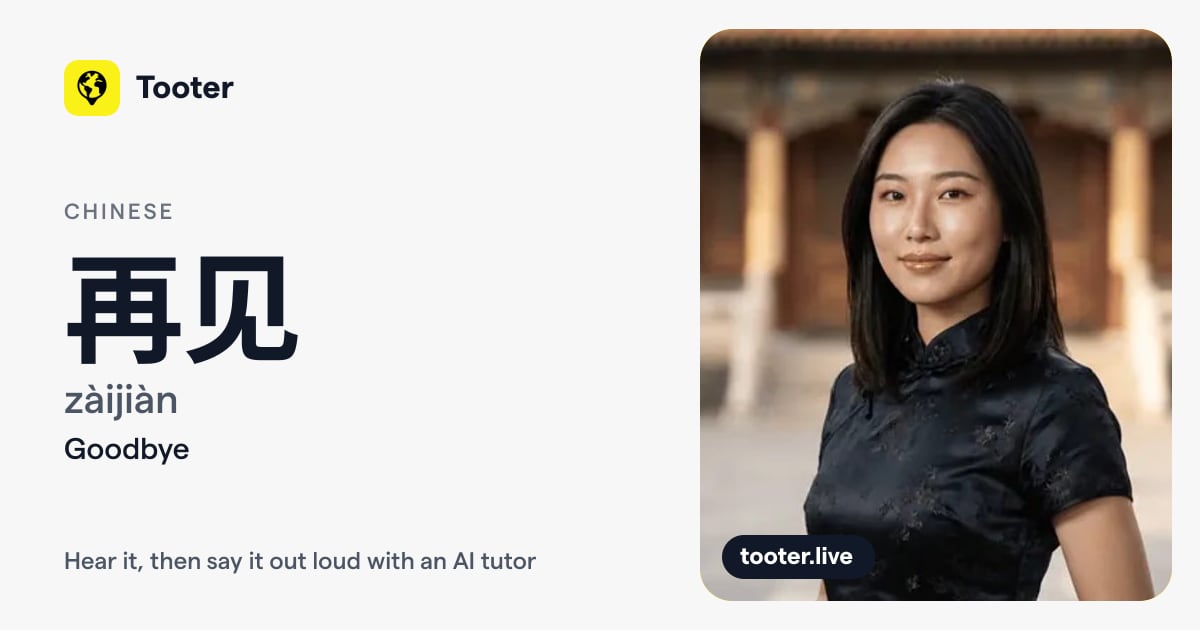
Bye in Chinese is 再见 (zàijiàn), literally "see again," and it works with anyone. Friends often say 拜拜 (bàibài), borrowed from English bye-bye. For a set time, use 明天见 (míngtiān jiàn, see you tomorrow); hosts tell leaving guests 慢走 (màn zǒu, take care).
Practice it with a tutor Live
 Live
 Live
Who will you say 再见 to?
Pick one to start your plan. It takes about a minute.
Every way to say goodbye in Chinese
再见 is safe everywhere. Friends and coworkers usually name when they'll see you next.
Literally "again see." Works with anyone.
From English. In speech many people say it with rising tones, bái bái.
Literally "turn your head and see."
For later the same day.
When there's no plan yet.
What you say when you leave before others, at work or a party.
Which Chinese goodbye to use
再见 (zàijiàn) is the Chinese goodbye that works with anyone. Friends and family often say 拜拜 instead, coworkers say 明天见, see you tomorrow, and only a host says 慢走 to a guest who is leaving.
| Phrase | Pinyin | Best for |
|---|---|---|
| 再见 | zàijiàn | Anyone, any time |
| 拜拜 | bàibài | Friends, family, texts |
| 明天见 | míngtiān jiàn | Coworkers, classmates |
| 慢走 | màn zǒu | Hosts to leaving guests |
| 保重 | bǎozhòng | Long partings |
| 一路平安 | yílù píng'ān | Someone traveling far |
| 晚安 | wǎn'ān | Bedtime |
Leaving a friend's home after dinner
You've had dinner at Wei's apartment. It's getting late.
Take care, safe trip and other partings
Chinese goodbyes often wish the other person well on the way home or on a journey.
- polite慢走màn zǒuTake care
Literally "walk slowly." Only the host or shopkeeper says it to someone leaving.
- casual路上小心lùshang xiǎoxīnBe careful on the way
- polite保重bǎozhòngTake care of yourself
For a long time apart, or someone unwell.
- polite一路平安yílù píng'ānHave a safe trip
- casual有空再来yǒu kòng zài láiCome again when you're free
- casual下周见xiàzhōu jiànSee you next week
- casual晚安wǎn'ānGood night
At bedtime, or the last message of the night.
Pick the best reply
Three goodbyes. Say each reply out loud, then pick the one that fits. Every reply is correct Chinese; some just don't fit the moment.
How to pronounce 再见
再见 (zàijiàn), goodbye in Chinese, is two fourth tones, each one dropping sharply from high to low. The z is a soft dz, so the whole word sounds close to dzai-jyen.
Two falling tones
再见 is zài jiàn: start each syllable high and drop it sharply, like a firm "no." The z is a soft dz, and j sounds close to the j in jeep with a smile.
ai and ian
再 rhymes with eye, said dzai. In 见, the pinyin ian sounds like yen, so it comes out close to jyen, never jee-an.
拜拜 is everywhere
In everyday life, 拜拜 is often more common than 再见, in person and in messages. Many speakers say it bái bái, with rising tones.
Name the next meeting
Add 见 (jiàn) to a time to make a goodbye: 明天见 (tomorrow), 下周见 (next week), 周末见 (zhōumò jiàn, this weekend).
慢走 is for the host
When you leave, say 我先走了 or 再见. Your host or the shopkeeper answers 慢走. Saying 慢走 yourself sounds like you're the host.
Say it out loud with a Chinese tutor
Lifelike AI tutors play the other person and correct you as you speak. Pick one to start.


Questions learners ask
How do you say bye in Chinese?
Say 再见 (zàijiàn) with anyone, or 拜拜 (bàibài) with friends. Both are understood everywhere Mandarin is spoken.
How do you say goodbye in Mandarin?
The standard goodbye is 再见 (zàijiàn). For a set time, add 见 to it: 明天见 (míngtiān jiàn) means see you tomorrow.
What does zaijian mean?
再见 (zàijiàn) literally means "again see," so see you again. It's the general goodbye, polite enough for any situation.
Do Chinese people say bai bai?
Yes, 拜拜 (bàibài) from English bye-bye is very common, especially among friends, family and in texts.
What does 慢走 mean?
慢走 (màn zǒu) literally means walk slowly, and it means take care. A host or shopkeeper says it to someone leaving.
How do you say see you later in Chinese?
Say 回头见 (huítóu jiàn) or, for later today, 一会儿见 (yíhuìr jiàn). Both are casual.
How do you say good night in Chinese?
Good night is 晚安 (wǎn'ān), said at bedtime or as the last message of the evening. For greetings at other times, see hello in Chinese.
How can I practice goodbyes in Chinese?
Practice short goodbye scenes out loud, paying attention to the tones. Tooter's Chinese tutors speak Mandarin and can play a host or a coworker, correcting your tones as you speak.
Practice 再见 with a tutor.
Answer a few quick questions, then practice out loud with a tutor.
By the Tooter Editorial Team. Updated November 19, 2026. Tooter tutors are AI characters, not human teachers. Romanization follows Hanyu Pinyin.