 Tooter
French numbers
French numbers 1 to 10 are un, deux, trois, quatre, cinq, six, sept, huit, neuf and dix, and zero is zéro. From 70, France uses compound forms: soixante-dix (70) is sixty-ten, quatre-vingts (80) is four twenties, and quatre-vingt-dix (90) is four twenties and ten.
Practice it with a tutor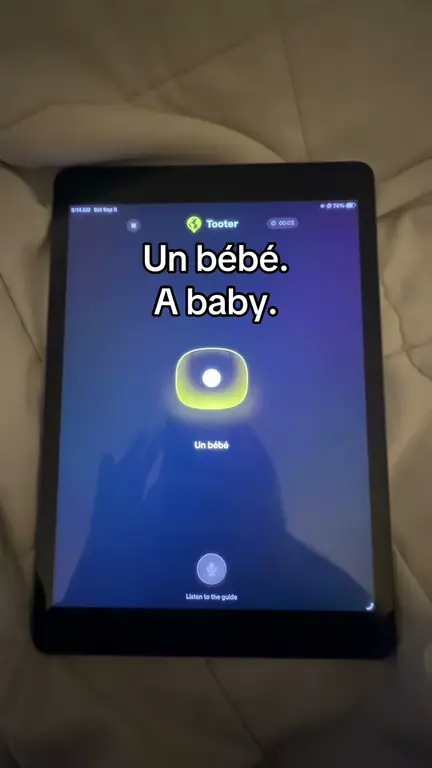 Learning French
- 112.3K likes
- 1.4K comments
- 128.7K shares
 Learning Spanish
- 102.8K likes
- 737 comments
- 22.9K shares
 Learning Korean
- 95.6K likes
- 1.5K comments
- 20.1K shares
Where will you use French numbers?
Pick one to start your plan. It takes about a minute.
French numbers 0 to 20
Learn these by heart: everything else is built from them. Sounds-like spellings are approximate; ahn, an, ohn and uhn are nasal vowels, so don't pronounce the n. One is un before a masculine noun and une before a feminine one.
| Number | French | Sounds like |
|---|---|---|
| 0 | zéro | zay-ROH |
| 1 | un | uhn |
| 2 | deux | duh |
| 3 | trois | twah |
| 4 | quatre | KA-truh |
| 5 | cinq | sank |
| 6 | six | sees |
| 7 | sept | set |
| 8 | huit | weet |
| 9 | neuf | nuhf |
| 10 | dix | dees |
| 11 | onze | ohnz |
| 12 | douze | dooz |
| 13 | treize | trehz |
| 14 | quatorze | ka-TORZ |
| 15 | quinze | kanz |
| 16 | seize | sehz |
| 17 | dix-sept | dee-SET |
| 18 | dix-huit | dee-ZWEET |
| 19 | dix-neuf | deez-NUHF |
| 20 | vingt | van |
Learners film their Tooter practice
Real videos from Tooter creators practicing with their tutor. Public TikTok counts, October 26, 2026.
 Learning German
- 26.9K likes
- 694 comments
- 3.9K shares
 Learning Korean
- 9.3K likes
- 124 comments
- 912 shares
 Learning Spanish
- 1.5K likes
- 31 comments
- 526 shares
 Learning Korean
- 3K likes
- 68 comments
- 412 shares
 Learning Korean
- 3.2K likes
- 44 comments
- 367 shares
 Learning Spanish
- 777 likes
- 26 comments
- 201 shares
Numbers 21 to 69
From 21 to 69, say the tens, then the ones. One is joined with et (and): vingt et un. The others take a hyphen: vingt-deux. The t of vingt is sounded from 21 to 29.
| Number | French | Sounds like |
|---|---|---|
| 21 | vingt et un | van-tay-UHN |
| 22 | vingt-deux | vant-DUH |
| 23 | vingt-trois | vant-TRWAH |
| 29 | vingt-neuf | vant-NUHF |
| 30 | trente | trahnt |
| 31 | trente et un | trahn-tay-UHN |
| 32 | trente-deux | trahnt-DUH |
| 40 | quarante | ka-RAHNT |
| 41 | quarante et un | ka-rahn-tay-UHN |
| 45 | quarante-cinq | ka-rahnt-SANK |
| 50 | cinquante | san-KAHNT |
| 51 | cinquante et un | san-kahn-tay-UHN |
| 58 | cinquante-huit | san-kahnt-WEET |
| 60 | soixante | swa-SAHNT |
| 61 | soixante et un | swa-sahn-tay-UHN |
| 66 | soixante-six | swa-sahnt-SEES |
| 69 | soixante-neuf | swa-sahnt-NUHF |
70 to 99: counting in twenties
70 is sixty-ten, so 71 to 79 add 11 to 19 to soixante. 80 is four twenties, and 90 is four twenties and ten. The t of vingt is silent from 81 to 99, and 81 and 91 take no et.
| Number | French | Sounds like |
|---|---|---|
| 70 | soixante-dix | swa-sahnt-DEES |
| 71 | soixante et onze | swa-sahn-tay-OHNZ |
| 72 | soixante-douze | swa-sahnt-DOOZ |
| 75 | soixante-quinze | swa-sahnt-KANZ |
| 77 | soixante-dix-sept | swa-sahnt-dee-SET |
| 79 | soixante-dix-neuf | swa-sahnt-deez-NUHF |
| 80 | quatre-vingts | ka-truh-VAN |
| 81 | quatre-vingt-un | ka-truh-van-UHN |
| 82 | quatre-vingt-deux | ka-truh-van-DUH |
| 85 | quatre-vingt-cinq | ka-truh-van-SANK |
| 89 | quatre-vingt-neuf | ka-truh-van-NUHF |
| 90 | quatre-vingt-dix | ka-truh-van-DEES |
| 91 | quatre-vingt-onze | ka-truh-van-OHNZ |
| 95 | quatre-vingt-quinze | ka-truh-van-KANZ |
| 99 | quatre-vingt-dix-neuf | ka-truh-van-deez-NUHF |
| 100 | cent | sahn |
Septante, huitante and nonante
Belgium and Switzerland use simpler words for 70 and 90. Huitante is used in the Swiss cantons of Vaud, Valais and Fribourg; Geneva, Neuchâtel and Jura say quatre-vingts. Octante is an old form you'll rarely hear. Most people in France understand septante and nonante but don't use them.
| Number | France | Belgium | Switzerland |
|---|---|---|---|
| 70 | soixante-dix | septante | septante |
| 71 | soixante et onze | septante et un | septante et un |
| 80 | quatre-vingts | quatre-vingts | huitante |
| 90 | quatre-vingt-dix | nonante | nonante |
| 99 | quatre-vingt-dix-neuf | nonante-neuf | nonante-neuf |
Hundreds, thousands and millions
No et after cent: 101 is cent un. Cent takes an s only when it's multiplied and nothing follows (deux cents, but deux cent un). Mille never changes.
| Number | French |
|---|---|
| 100 | cent |
| 101 | cent un |
| 110 | cent dix |
| 200 | deux cents |
| 201 | deux cent un |
| 250 | deux cent cinquante |
| 500 | cinq cents |
| 1,000 | mille |
| 1,001 | mille un |
| 2,000 | deux mille |
| 10,000 | dix mille |
| 100,000 | cent mille |
| 1,000,000 | un million |
| 2,000,000 | deux millions |
| 1,000,000,000 | un milliard |
Numbers before a word: silent and linked letters
Six, huit and dix sound their last letter when they stand alone (sees, weet, dees). Before a consonant it goes silent; before a vowel it links as a z or a t. Neuf links as a v only before ans and heures.
| Phrase | Meaning | Sounds like |
|---|---|---|
| deux ans | two years | duh-ZAHN |
| trois enfants | three children | trwah-zahn-FAHN |
| six livres | six books | see LEEVR |
| six ans | six years | see-ZAHN |
| huit jours | eight days | wee ZHOOR |
| huit heures | eight o'clock | wee-TUHR |
| neuf ans | nine years | nuh-VAHN |
| dix minutes | ten minutes | dee mee-NOOT |
| dix euros | ten euros | dee-zuh-ROH |
| vingt ans | twenty years | van-TAHN |
| cent euros | a hundred euros | sahn-tuh-ROH |
French phone numbers: read in pairs
French phone numbers have 10 digits, written and read in five pairs. Mobile numbers start with 06 or 07, and the first pair keeps its zero. Here is 06 12 34 56 78.
| Pair | Said as |
|---|---|
| 06 | zéro six |
| 12 | douze |
| 34 | trente-quatre |
| 56 | cinquante-six |
| 78 | soixante-dix-huit |
Answer with the right number
Play the question, then pick the reply that fits. Listen for what you're being asked: people, age or a phone number.
Rules that make French numbers make sense
70 to 99 build on 60 and 80
Soixante-dix is 60 + 10, so 75 is soixante-quinze (60 + 15). Quatre-vingts is 4 x 20, and quatre-vingt-dix is 4 x 20 + 10, so 95 is quatre-vingt-quinze.
Et only joins one
21, 31, 41, 51 and 61 add et un, and 71 is soixante et onze. 81 and 91 don't: quatre-vingt-un, quatre-vingt-onze. Neither does 101: cent un.
Hyphens join the small parts
Traditionally, numbers under 100 take hyphens (vingt-deux, quatre-vingt-dix) except where et joins them (vingt et un), and cent and mille stand apart (deux cent trois). The 1990 spelling reform allows hyphens between all the number words (vingt-et-un, deux-cent-trois), and both spellings are accepted.
The s comes and goes
Quatre-vingts and deux cents take an s only when nothing follows: quatre-vingt-deux, deux cent dix. Mille never takes one: deux mille. Million and milliard are nouns: deux millions, un million d'euros.
Un or une
One agrees with the noun: un livre, une table. The same happens at the end of bigger numbers: vingt et une pages, trente et un jours.
Commas and spaces flip
France writes 2,5 for 2.5 and 10 000 for 10,000. A price of 4,50 € is read quatre euros cinquante. Reading prices aloud in a café role play, for example with a Tooter tutor, is a quick way to get fast at them.
Numbers in everyday sentences
Say the euros, then the cents.
Age uses avoir (to have), never je suis.
Timetables, shops and appointments use the 24-hour clock.
A man writes né; it sounds the same.
Only the first of the month uses premier. After that: le deux mai, le trois mai.
Most numbers add -ième: quatrième, dixième. Watch cinquième and neuvième.
Say numbers in real sentences
Play a sentence, record yourself and compare. Recordings stay in your browser and aren't scored.
Your recording stays on this device and isn't scored. In the app, your tutor listens and corrects you as you speak.
Say it out loud with a French tutor
Lifelike AI tutors play the other person and correct you as you speak. Pick one to start.
 Camilleculture-richPractice with Camille
 Amelieconfidence-buildingPractice with Amelie
 Leanatural correctionPractice with Lea
 Manonfluency-drivenPractice with Manon
 Clarascenario-ledPractice with Clara
 Inesrhythm-awarePractice with Ines
 Julietteconversation-firstPractice with Juliette
 Noemietravel-focusedPractice with Noemie
 @liv.slowlyfluent
 @learningwith.emma
 @learningwith.michelle
Questions learners ask
How do you count to 10 in French?
Un, deux, trois, quatre, cinq, six, sept, huit, neuf, dix. Zero is zéro, and one becomes une before a feminine noun.
Why is 80 quatre-vingts in French?
It means four twenties. Old French often counted in twenties (six-vingts was 120), and in France the habit stayed for 80 and 90: quatre-vingts and quatre-vingt-dix (four twenties and ten). 70 is soixante-dix (sixty-ten).
How do you say 70 in French?
In France and Quebec, 70 is soixante-dix (sixty-ten). In Belgium and Switzerland, it's septante.
Do French speakers say septante, huitante and nonante?
Belgians and the Swiss say septante (70) and nonante (90). Huitante (80) is used in the Swiss cantons of Vaud, Valais and Fribourg, while Belgium and the rest of French-speaking Switzerland, including Geneva, say quatre-vingts. In France, everyone uses soixante-dix, quatre-vingts and quatre-vingt-dix.
When do you use et in French numbers?
Only to join one to 20, 30, 40, 50 and 60 (vingt et un, soixante et un), plus soixante et onze (71). Everything else uses a hyphen, so 81 is quatre-vingt-un and 101 is cent un.
How do you say phone numbers in French?
In five pairs of two digits: 06 12 34 56 78 is zéro six, douze, trente-quatre, cinquante-six, soixante-dix-huit. People often start with c'est le (it's the).
How do you say years in French?
Usually as one whole number: 1995 is mille neuf cent quatre-vingt-quinze, and 2026 is deux mille vingt-six. You'll also hear dix-neuf cent quatre-vingt-quinze for years in the 1900s.
How do you say 1,000 and a million in French?
A thousand is mille, never un mille, and it never takes an s: deux mille. A million is un million, with de before a noun (un million d'euros), and a billion is un milliard.
Count in French with a tutor today.
Answer a few quick questions, then practice out loud with a tutor.
By the Tooter Editorial Team. Updated November 9, 2026. Tooter tutors are AI characters, not human teachers.