 Tooter
Korean numbers
Korean has two number systems. Native Korean numbers 1 to 10 are 하나, 둘, 셋, 넷, 다섯, 여섯, 일곱, 여덟, 아홉, 열 (hana to yeol), used for counting things, age and hours. Sino-Korean numbers are 일, 이, 삼, 사, 오, 육, 칠, 팔, 구, 십 (il to sip), used for money, dates, minutes and phone numbers.
Practice it with a tutor Learning Korean
- 95.6K likes
- 1.5K comments
- 20.1K shares
 Learning French
- 112.3K likes
- 1.4K comments
- 128.7K shares
 Learning Spanish
- 102.8K likes
- 737 comments
- 22.9K shares
Where will you use numbers?
Pick one to start your plan. It takes about a minute.
Native Korean numbers 1 to 10
Used for counting things and people, age and the hour. Before a counter word, 1 to 4 (and 20) take a short form.
| Number | Korean | Romanization | Before a counter |
|---|---|---|---|
| 1 | 하나 | hana | 한 (han) |
| 2 | 둘 | dul | 두 (du) |
| 3 | 셋 | set | 세 (se) |
| 4 | 넷 | net | 네 (ne) |
| 5 | 다섯 | daseot | 다섯 (daseot) |
| 6 | 여섯 | yeoseot | 여섯 (yeoseot) |
| 7 | 일곱 | ilgop | 일곱 (ilgop) |
| 8 | 여덟 | yeodeol | 여덟 (yeodeol) |
| 9 | 아홉 | ahop | 아홉 (ahop) |
| 10 | 열 | yeol | 열 (yeol) |
Learners film their Tooter practice
Real videos from Tooter creators practicing with their tutor. Public TikTok counts, October 26, 2026.
 Learning Korean
- 9.3K likes
- 124 comments
- 912 shares
 Learning Korean
- 3K likes
- 68 comments
- 412 shares
 Learning Korean
- 3.2K likes
- 44 comments
- 367 shares
 Learning German
- 26.9K likes
- 694 comments
- 3.9K shares
 Learning Spanish
- 1.5K likes
- 31 comments
- 526 shares
 Learning Spanish
- 777 likes
- 26 comments
- 201 shares
Sino-Korean numbers 0 to 10
Based on Chinese numbers. Used for money, dates, months, minutes, phone numbers and math.
| Number | Korean | Romanization |
|---|---|---|
| 0 | 영 / 공 | yeong / gong (gong in phone numbers) |
| 1 | 일 | il |
| 2 | 이 | i |
| 3 | 삼 | sam |
| 4 | 사 | sa |
| 5 | 오 | o |
| 6 | 육 | yuk |
| 7 | 칠 | chil |
| 8 | 팔 | pal |
| 9 | 구 | gu |
| 10 | 십 | sip |
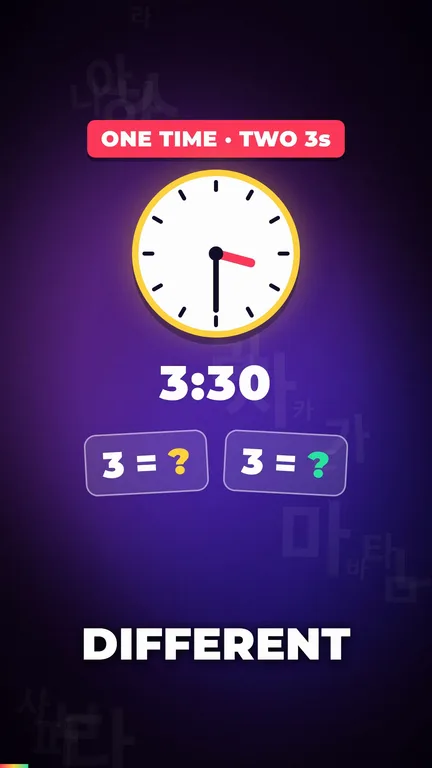
Why 3:30 takes two different 3s
Hours and minutes come from different number systems. Start with this one, then watch the other five.




Answer with the right number
Play the question, then tap the reply that fits. Listen for what is being counted.
Tens in both systems
Native Korean has its own word for each ten up to 90. Sino-Korean just says "two ten," "three ten" and so on.
| Number | Native Korean | Sino-Korean |
|---|---|---|
| 10 | 열 (yeol) | 십 (sip) |
| 20 | 스물 (seumul) | 이십 (isip) |
| 30 | 서른 (seoreun) | 삼십 (samsip) |
| 40 | 마흔 (maheun) | 사십 (sasip) |
| 50 | 쉰 (swin) | 오십 (osip) |
| 60 | 예순 (yesun) | 육십 (yuksip) |
| 70 | 일흔 (ilheun) | 칠십 (chilsip) |
| 80 | 여든 (yeodeun) | 팔십 (palsip) |
| 90 | 아흔 (aheun) | 구십 (gusip) |
100, 1,000 and up (Sino-Korean only)
Korean groups large numbers by ten thousand (만), not by thousand. So 100,000 is "ten 만" and 1,000,000 is "one hundred 만."
| Number | Korean | Romanization |
|---|---|---|
| 100 | 백 | baek |
| 1,000 | 천 | cheon |
| 10,000 | 만 | man |
| 100,000 | 십만 | simman |
| 1,000,000 | 백만 | baengman |
| 100,000,000 | 일억 | ireok |
Korean counters: what to say after a number
Korean adds a counter word after the number. Most counters take native numbers in their short form. A few, like floors and restaurant portions, take Sino-Korean numbers.
| Counter | Used for | Numbers | Example |
|---|---|---|---|
| 개 (gae) | Things in general | Native | 사과 두 개 (sagwa du gae, two apples) |
| 명 (myeong) | People | Native | 세 명 (se myeong, three people) |
| 분 (bun) | People, respectful | Native | 네 분 (ne bun, four people) |
| 잔 (jan) | Cups and glasses | Native | 커피 한 잔 (keopi han jan, one cup of coffee) |
| 병 (byeong) | Bottles | Native | 맥주 두 병 (maekju du byeong, two bottles of beer) |
| 마리 (mari) | Animals | Native | 고양이 한 마리 (goyangi han mari, one cat) |
| 권 (gwon) | Books | Native | 책 세 권 (chaek se gwon, three books) |
| 장 (jang) | Flat things like tickets and paper | Native | 표 두 장 (pyo du jang, two tickets) |
| 대 (dae) | Cars and machines | Native | 차 한 대 (cha han dae, one car) |
| 층 (cheung) | Floors of a building | Sino-Korean | 삼 층 (sam cheung, third floor) |
| 인분 (inbun) | Portions at a restaurant | Sino-Korean | 이 인분 (i inbun, two portions) |
Age in Korean
In speech, use native numbers with 살 (sal). On forms and in formal writing, use Sino-Korean numbers with 세 (se). Since a 2023 law, official age in Korea counts from birth as in most countries, though you may still hear people mention the older Korean way of counting age.
| Age | Spoken | Formal |
|---|---|---|
| 20 | 스무 살 (seumu sal) | 이십 세 (isip se) |
| 21 | 스물한 살 (seumulhan sal) | 이십일 세 (isibil se) |
| 25 | 스물다섯 살 (seumuldaseot sal) | 이십오 세 (isibo se) |
| 30 | 서른 살 (seoreun sal) | 삼십 세 (samsip se) |
| 40 | 마흔 살 (maheun sal) | 사십 세 (sasip se) |
Telling the time in Korean
Native numbers for the hour, Sino-Korean for the minutes. 오전 (ojeon) means a.m. and 오후 (ohu) means p.m., and they go before the time. 반 (ban) means half past.
| Time | Korean | Romanization |
|---|---|---|
| 1:00 | 한 시 | han si |
| 3:30 | 세 시 삼십 분 / 세 시 반 | se si samsip bun / se si ban |
| 12:15 | 열두 시 십오 분 | yeoldu si sibo bun |
| 9 a.m. | 오전 아홉 시 | ojeon ahop si |
| 6 p.m. | 오후 여섯 시 | ohu yeoseot si |
| For two hours | 두 시간 | du sigan |
Money in Korean: reading prices in won
Prices use Sino-Korean numbers plus 원 (won). Remember to group by 만 (10,000), and drop the 일 before 천 and 만.
| Price | Korean | Romanization |
|---|---|---|
| 1,000 won | 천 원 | cheon won |
| 1,500 won | 천오백 원 | cheonobaek won |
| 5,000 won | 오천 원 | ocheon won |
| 10,000 won | 만 원 | man won |
| 15,000 won | 만 오천 원 | man ocheon won |
| 50,000 won | 오만 원 | oman won |
| 100,000 won | 십만 원 | simman won |
Which system to use
Build numbers like a calculator
11 is 10 + 1: 열하나 (yeolhana) or 십일 (sibil). 25 is 스물다섯 (seumuldaseot) or 이십오 (isibo). Sino-Korean 200 is 이백 (ibaek), but 100 is just 백, not 일백. 천 and 만 work the same way. 억 is the exception: 100,000,000 is 일억 (ireok).
Native for counting and age
Use native numbers with counters: 사과 두 개 (sagwa du gae, two apples), 세 명 (se myeong, three people), 스무 살 (seumu sal, 20 years old). They usually go up to 99; bigger counts switch to Sino-Korean.
Sino for money, dates and minutes
Prices (오천 원, ocheon won, 5,000 won), dates (삼월 십일, samwol sibil, March 10), minutes (삼십 분, samsip bun) and phone numbers all use Sino-Korean.
Time mixes both
Hours are native and minutes are Sino-Korean: 세 시 삼십 분 (se si samsip bun) is 3:30. Mixing them up is a common beginner mistake, and people will still understand you.
Exceptions to watch for
June and October change
Months use Sino-Korean numbers plus 월, but 6월 is 유월 (yuwol), not 육월, and 10월 is 시월 (siwol), not 십월.
6 changes after other numbers
육 picks up an n sound after a number ending in a consonant: 십육 (16) sounds like simnyuk and 이십육 (26) like isimnyuk.
Short forms stay in bigger numbers
한, 두, 세 and 네 stay short inside larger numbers: 열한 개 (yeolhan gae, 11 things), 스물두 살 (seumuldu sal, 22 years old). 20 becomes 스무 before a counter, but 21 is 스물한.
번 has two meanings
With native numbers, 번 counts times: 두 번 (du beon, twice). With Sino-Korean numbers, it's a number in a series: 이 번 (i beon, number 2).
Useful sentences with numbers
With someone older, 연세가 어떻게 되세요? (yeonsega eotteoke doeseyo?) is the respectful way to ask.
Portions take Sino-Korean numbers, so this is 이, not 두.
Say numbers in real sentences
Play a sentence, record yourself and compare.
Your recording stays on this device and isn't scored. In the app, your tutor listens and corrects you as you speak.
Say it out loud with a Korean tutor
Lifelike AI tutors play the other person and correct you as you speak. Pick one to start.
 Minjiconversation-firstPractice with Minji
 Hanatravel-focusedPractice with Hana
 Jisooculture-richPractice with Jisoo
 Yunaconfidence-buildingPractice with Yuna
 Soranatural correctionPractice with Sora
 Jiwoofluency-drivenPractice with Jiwoo
 Nariscenario-ledPractice with Nari
 Sujinrhythm-awarePractice with Sujin
 @learningwith.emma
 @learningwith.michelle
Questions learners ask
What is 1, 2, 3, 4, 5, 6, 7, 8, 9, 10 in Korean?
In native Korean: 하나, 둘, 셋, 넷, 다섯, 여섯, 일곱, 여덟, 아홉, 열 (hana, dul, set, net, daseot, yeoseot, ilgop, yeodeol, ahop, yeol). In Sino-Korean: 일, 이, 삼, 사, 오, 육, 칠, 팔, 구, 십 (il, i, sam, sa, o, yuk, chil, pal, gu, sip).
Why does Korean have two number systems?
Native Korean numbers are the original Korean words, and Sino-Korean numbers came from Chinese. Over time each took over different jobs: native for counting things, age and hours, Sino-Korean for money, dates, minutes and math.
Does Korea use Arabic numbers?
Yes. Prices, dates, phone numbers and signs are written with Arabic numerals (1, 2, 3). You only need the Korean words when reading them aloud, and the context decides which system you use.
How do you say zero in Korean?
Zero is 영 (yeong) in most contexts, such as scores and temperatures. In phone numbers, Koreans usually say 공 (gong).
How do you count in Korean?
To count objects or people, use native Korean numbers plus a counter word: 하나, 둘, 셋 when counting aloud, and 한 개, 두 개 (han gae, du gae) for one thing, two things.
How do you say your age in Korean?
Use native numbers plus 살 (sal): 스물다섯 살이에요 (seumuldaseot sarieyo) means I'm 25. Age 20 is 스무 살 (seumu sal). To ask someone's age, say 몇 살이에요? (myeot sarieyo?), or 연세가 어떻게 되세요? (yeonsega eotteoke doeseyo?) with someone older.
How do you tell the time in Korean?
Use native numbers for the hour and Sino-Korean numbers for the minutes: 세 시 삼십 분 (se si samsip bun) is 3:30, and 세 시 반 (se si ban) is half past three. Add 오전 (ojeon) for a.m. or 오후 (ohu) for p.m. in front.
How do you say prices in Korean?
Use Sino-Korean numbers plus 원 (won), and group large numbers by 만 (10,000). 천 원 (cheon won) is 1,000 won, 만 원 (man won) is 10,000 won, and 만 오천 원 (man ocheon won) is 15,000 won.
Count to 열 with a tutor today.
Answer a few quick questions, then practice out loud with a tutor.
By the Tooter Editorial Team. Updated November 4, 2026. Tooter tutors are AI characters, not human teachers. Romanization follows Revised Romanization.