 Tooter
How to say who in Spanish
Who in Spanish is quién, said like kyen, as in ¿Quién es? (Who is it?). When you expect more than one person, use quiénes: ¿Quiénes vienen? (Who is coming?). Whose is de quién, and the question form always carries an accent mark.
Practice it with a tutor Learning Spanish
- 102.8K likes
- 737 comments
- 22.9K shares
 Learning French
- 112.3K likes
- 1.4K comments
- 128.7K shares
 Learning Korean
- 95.6K likes
- 1.5K comments
- 20.1K shares
Who will you ask about first?
Pick one to start your plan. It takes about a minute.
Every way to ask who
Quién is the word for one person. Add a little word in front of it for whose, with whom or to whom.
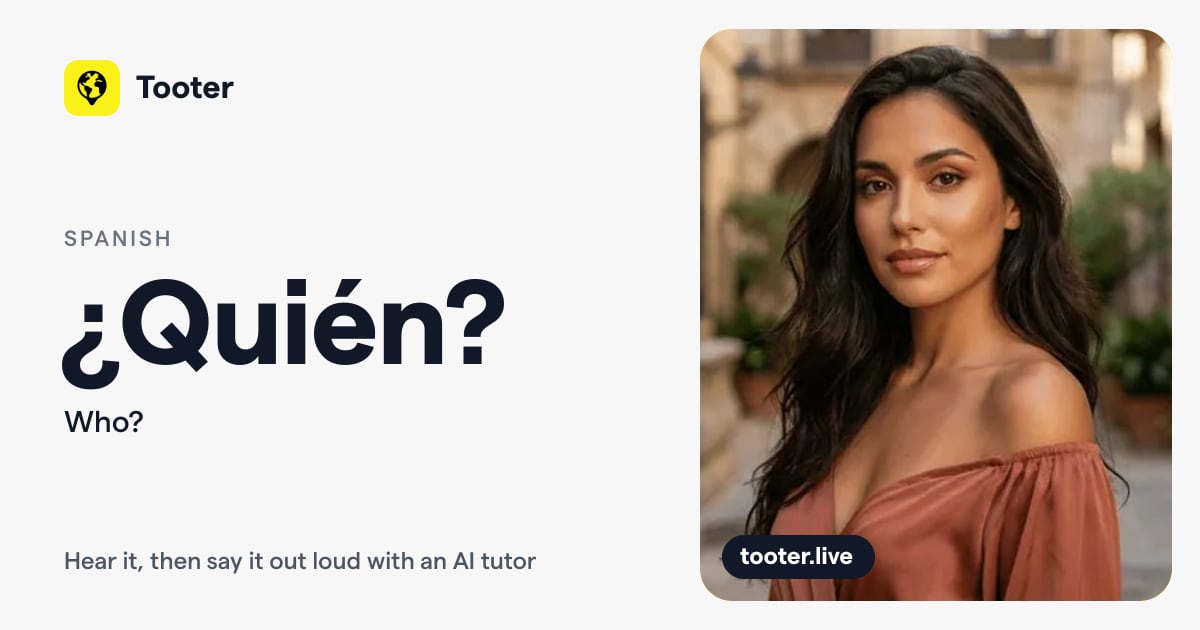
For one person, or when you don't know how many.
Use it when you expect a group: ¿Quiénes son? Who are they?
What you say when someone knocks or rings the bell.
Direct. With a stranger it can sound suspicious, so it's mostly for kids and friends joking.
Spanish has no single word for whose. Say of who: de quién.
Everyday Spanish. It doesn't sound stiff like with whom in English.
For who you call, see or help: ¿A quién llamas? Who are you calling?
A shrug in words, same as in English.
Learners film their Tooter practice
Real videos from Tooter creators practicing with their tutor. Public TikTok counts, October 26, 2026.
 Learning Spanish
- 1.5K likes
- 31 comments
- 526 shares
 Learning Spanish
- 777 likes
- 26 comments
- 201 shares
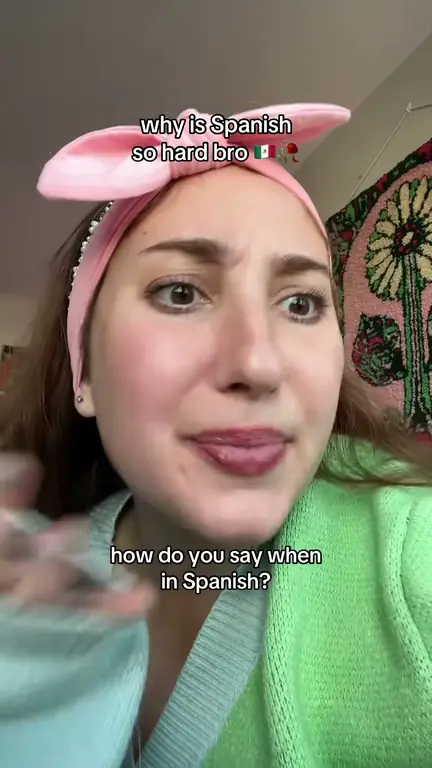 Learning Spanish
- 374 likes
- 10 comments
- 49 shares
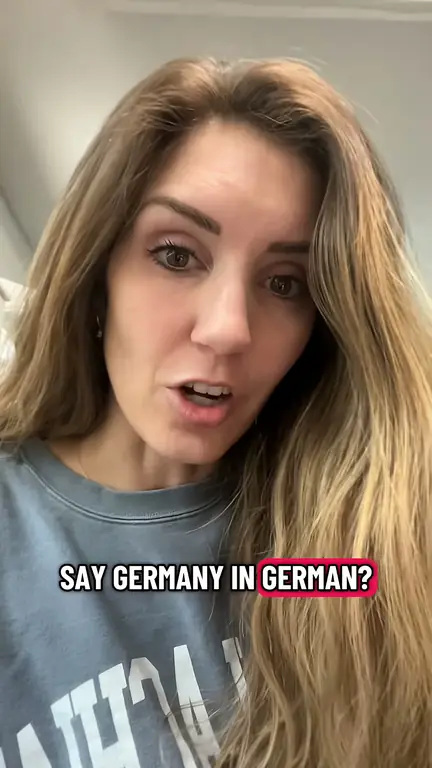 Learning German
- 26.9K likes
- 694 comments
- 3.9K shares
 Learning Korean
- 9.3K likes
- 124 comments
- 912 shares
 Learning Korean
- 3K likes
- 68 comments
- 412 shares
Quién, quiénes, quien or de quién?
¿Quién? (who?) is the Spanish question word for one person; use ¿quiénes? when you expect several. Whose is ¿de quién?, and plain quien without an accent only links two parts of a sentence.
| Spanish | Meaning | Example |
|---|---|---|
| ¿Quién? | Who? (one) | ¿Quién llamó? |
| ¿Quiénes? | Who? (several) | ¿Quiénes vienen? |
| ¿De quién? | Whose? | ¿De quién es esto? |
| ¿A quién? | Who? (object) | ¿A quién buscas? |
| ¿Con quién? | With whom? | ¿Con quién vas? |
| quién (inside) | who (indirect) | No sé quién es. |
| quien | who (linking) | Fue ella quien llamó. |
Asking who is in the photos
Diego shows you pictures from his trip. Ask who each person is, then whose dog it is.
Who questions you'll hear every day
These come up on the phone, in line and when someone passes on news.
- casual¿Quién habla?Who's calling?
On the phone, when you don't recognize the voice.
- polite¿Con quién hablo?Who am I speaking with?
The polite version on a work or business call.
- polite¿A quién le toca?Whose turn is it?
In a line, a game or at a counter.
- casual¿Quién te dijo eso?Who told you that?
Te is for someone you call tú.
- politeAlguien llamó.Someone called.
Alguien is someone. Nadie is no one.
- politeNo sé quién es.I don't know who it is.
Quién keeps its accent inside the sentence because it's still a question.
Pick the best reply
Valeria says three things. Say each reply out loud, then pick the one that fits. Every reply is correct Spanish; some just don't fit the moment.
How to pronounce and use quién
Spanish quién (who) is one syllable, kyen: the u is silent, so it starts with a k and glides through ye. Saying kwen is the classic beginner slip. The plural quiénes is KYEH-nes.
Say kyen, not kwen
In qu the u is silent, so quién starts with a k sound and glides into ye: kyen. Quiénes is KYEH-nes.
Write the accent in questions
¿Quién?, ¿quiénes? and indirect questions like no sé quién es all take an accent. Leaving it off is a common spelling mistake, though people still understand.
Match quién to the number
English uses who for one person or many. Spanish says quién for one and quiénes when you expect several, and the verb follows: ¿quiénes son?
Put a before who as the object
When who is the person receiving the action, Spanish adds a: ¿A quién viste? Who did you see? Leaving out the a is one of the most common learner mistakes.
Say it out loud with a Spanish tutor
Lifelike AI tutors play the other person and correct you as you speak. Pick one to start.
 Sofianatural correctionPractice with Sofia
 Luciafluency-drivenPractice with Lucia
 Valeriascenario-ledPractice with Valeria
 Albarhythm-awarePractice with Alba
 Carmenconversation-firstPractice with Carmen
 Claratravel-focusedPractice with Clara
 Martaculture-richPractice with Marta
 Elenaconfidence-buildingPractice with Elena
 @wallakpu.slowly.fluent
 @learningwith.michelle
Questions learners ask
How do you say who in Spanish?
Say quién (kyen) for one person and quiénes when you mean several. For example, ¿Quién es? means Who is it?
How do you pronounce quién?
Say kyen, one syllable, with the u silent. A Tooter AI tutor can listen as you ask questions with quién and correct your pronunciation.
What is the difference between quién and quien?
Quién with an accent asks a question, directly or inside a sentence: no sé quién es. Quien without an accent links two parts of a sentence: fue ella quien llamó, it was she who called.
How do you say who are you in Spanish?
Casually, ¿Quién eres? Formally, ¿Quién es usted? Both are direct, so with a stranger on the phone ¿Con quién hablo? sounds friendlier.
How do you say whose in Spanish?
Use de quién: ¿De quién es este libro? means Whose book is this? Use ¿De quién son? for more than one thing.
How do you say who is it in Spanish?
Say ¿Quién es? when someone knocks or rings. On the phone people also say ¿Quién habla?
What are the other question words in Spanish?
Qué (what), cuándo (when), dónde (where), por qué (why), cómo (how) and cuánto (how much). See what in Spanish for qué and cuál.
How do you say someone and no one in Spanish?
Someone is alguien and no one is nadie. Alguien llamó means someone called, and no vino nadie means no one came.
Practice asking quién with a tutor.
Answer a few quick questions, then practice out loud with a tutor.
By the Tooter Editorial Team. Updated November 14, 2026. Tooter tutors are AI characters, not human teachers.