 Tooter
How to say when in Spanish
When in Spanish is ¿cuándo? (KWAHN-doh), with an accent in questions. In statements it loses the accent: te llamo cuando llegue means I'll call you when I arrive. To ask the exact time, say ¿a qué hora?
Practice it with a tutor Learning Spanish
- 102.8K likes
- 737 comments
- 22.9K shares
 Learning French
- 112.3K likes
- 1.4K comments
- 128.7K shares
 Learning Korean
- 95.6K likes
- 1.5K comments
- 20.1K shares
Where will you ask ¿cuándo?
Pick one to start your plan. It takes about a minute.
Every way to ask when in Spanish
¿Cuándo? (when?) is the Spanish question for a day or a moment, and it works with anyone. For a clock time, ask ¿a qué hora? instead, and use ¿desde cuándo? to ask since when.
The question word, with anyone.
For events: a party, an exam, a concert.
For a clock time. The answer is a las plus the hour: a las ocho.
When you need the day, not the time.
Asks how long something has been going on. With surprise in your voice, it can sound like a challenge.
Asks when something ends, like a stay or a sale.
For deadlines. With usted: ¿para cuándo lo necesita?
The natural way to set up plans with a friend.
Learners film their Tooter practice
Real videos from Tooter creators practicing with their tutor. Public TikTok counts, October 26, 2026.
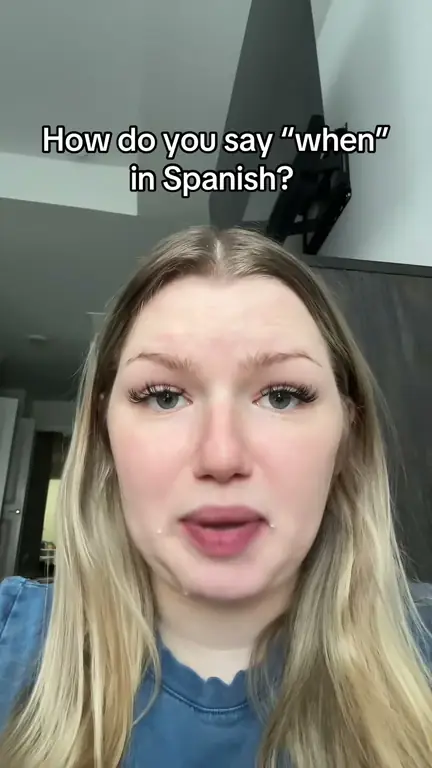 Learning Spanish
- 1.5K likes
- 31 comments
- 526 shares
 Learning Spanish
- 777 likes
- 26 comments
- 201 shares
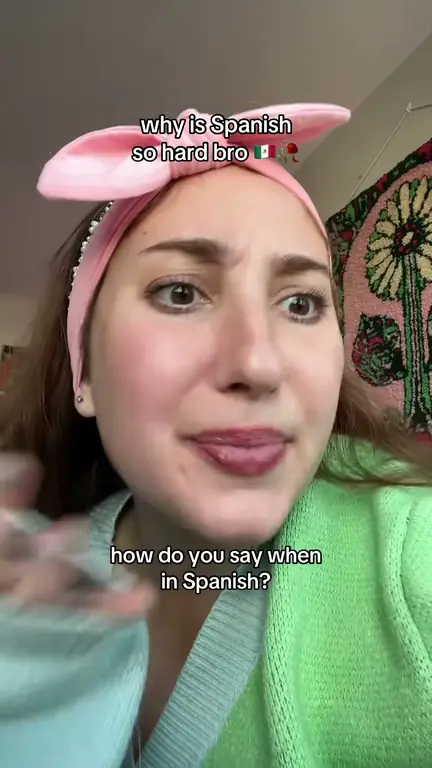 Learning Spanish
- 374 likes
- 10 comments
- 49 shares
 Learning German
- 26.9K likes
- 694 comments
- 3.9K shares
 Learning Korean
- 9.3K likes
- 124 comments
- 912 shares
 Learning Korean
- 3K likes
- 68 comments
- 412 shares
Cuándo or cuando: when to use the accent
The accent goes on questions, even hidden ones inside a sentence. Everywhere else, write cuando.
| Spanish | English | Accent |
|---|---|---|
| ¿Cuándo llegas? | When do you arrive? | Yes: a question |
| No sé cuándo es. | I don't know when it is. | Yes: hidden question |
| Te llamo cuando llegue. | I'll call when I arrive. | No: not a question |
| Cuando era niño... | When I was a kid... | No: not a question |
| De vez en cuando | Now and then | No: set phrase |
Making plans for a concert
A friend has tickets. Ask when the concert is and when to meet.
How to answer ¿cuándo? in Spanish
A Spanish ¿cuándo? (when?) is usually answered with a short time word: hoy (today), mañana (tomorrow) or la próxima semana (next week). In Mexico, ahorita can mean now or later, so check.
- politeHoyToday
- politeMañanaTomorrow
Also means morning: mañana en la mañana is tomorrow morning.
- politeEl fin de semanaOn the weekend
- politeLa próxima semanaNext week
- politeEn cinco minutosIn five minutes
- casualAhoritaRight now; in a bit
Mexico and much of Latin America. It can mean now or later, so ask if the timing matters.
- politeTodavía no sé.I don't know yet.
Pick the best reply
Say each reply out loud, then pick the one that fits. Every reply is correct Spanish; some just don't fit the moment.
How to pronounce and use cuándo
Spanish cuándo (when) is said KWAHN-doh, with the stress on the first syllable. The cu sounds like kw, the a is open like in father, and the d is made with the tongue touching the top teeth.
Say KWAHN-doh
Stress the first syllable. The cu sounds like kw, and the d is soft, with your tongue touching your top teeth.
Accent only for questions
Write cuándo when you ask, even inside a sentence: no sé cuándo es. Write cuando when it links two ideas: cuando llueve, no salgo.
Future after cuando
For something that hasn't happened yet, cuando takes the subjunctive: cuando llegues, not cuando llegas. Learners mix this up for a long time, and people still understand them.
Ask for the hour
¿Cuándo? can get an answer like el viernes. If you need the clock time, ask ¿a qué hora? right away.
Say it out loud with a Spanish tutor
Lifelike AI tutors play the other person and correct you as you speak. Pick one to start.
 Sofianatural correctionPractice with Sofia
 Luciafluency-drivenPractice with Lucia
 Valeriascenario-ledPractice with Valeria
 Albarhythm-awarePractice with Alba
 Carmenconversation-firstPractice with Carmen
 Claratravel-focusedPractice with Clara
 Martaculture-richPractice with Marta
 Elenaconfidence-buildingPractice with Elena
 @wallakpu.slowly.fluent
 @learningwith.michelle
Questions learners ask
How do you say when in Spanish?
Say ¿cuándo? (KWAHN-doh). It has an accent in questions and works with anyone.
What is the difference between cuándo and cuando?
Cuándo with an accent asks a question, even an indirect one like no sé cuándo es. Cuando without an accent links two ideas, like when in I call you when I arrive: te llamo cuando llegue.
How do you ask what time in Spanish?
Say ¿a qué hora? to ask when something happens, and ¿qué hora es? to ask the time right now. Answers use the numbers: a las ocho, son las tres. See Spanish numbers to read the times.
How do you say since when in Spanish?
Say ¿desde cuándo? It asks how long something has been going on. Said with surprise, it can sound like a challenge, just like in English.
Why is it cuando llegues and not cuando llegas?
When cuando talks about the future, the verb goes in the subjunctive: cuando llegues, cuando puedas. For habits or the past, use the normal form: cuando llego a casa, ceno.
What does ahorita mean?
Ahorita literally means right now, but in Mexico it often means in a little while. If timing matters, ask ¿a qué hora? or ¿cuándo exactamente?
How do you say when is your birthday in Spanish?
Ask ¿cuándo es tu cumpleaños?, or ¿cuándo es su cumpleaños? with usted. The answer is the day and the month: es el doce de mayo.
How do I practice asking when in Spanish?
Make plans out loud: ask when, what time and what day until it feels automatic. A Tooter AI tutor can play a friend setting up plans and correct your questions as you speak.
Ask ¿cuándo? and make real plans.
Answer a few quick questions, then practice out loud with a tutor.
By the Tooter Editorial Team. Updated November 10, 2026. Tooter tutors are AI characters, not human teachers.